August 2023
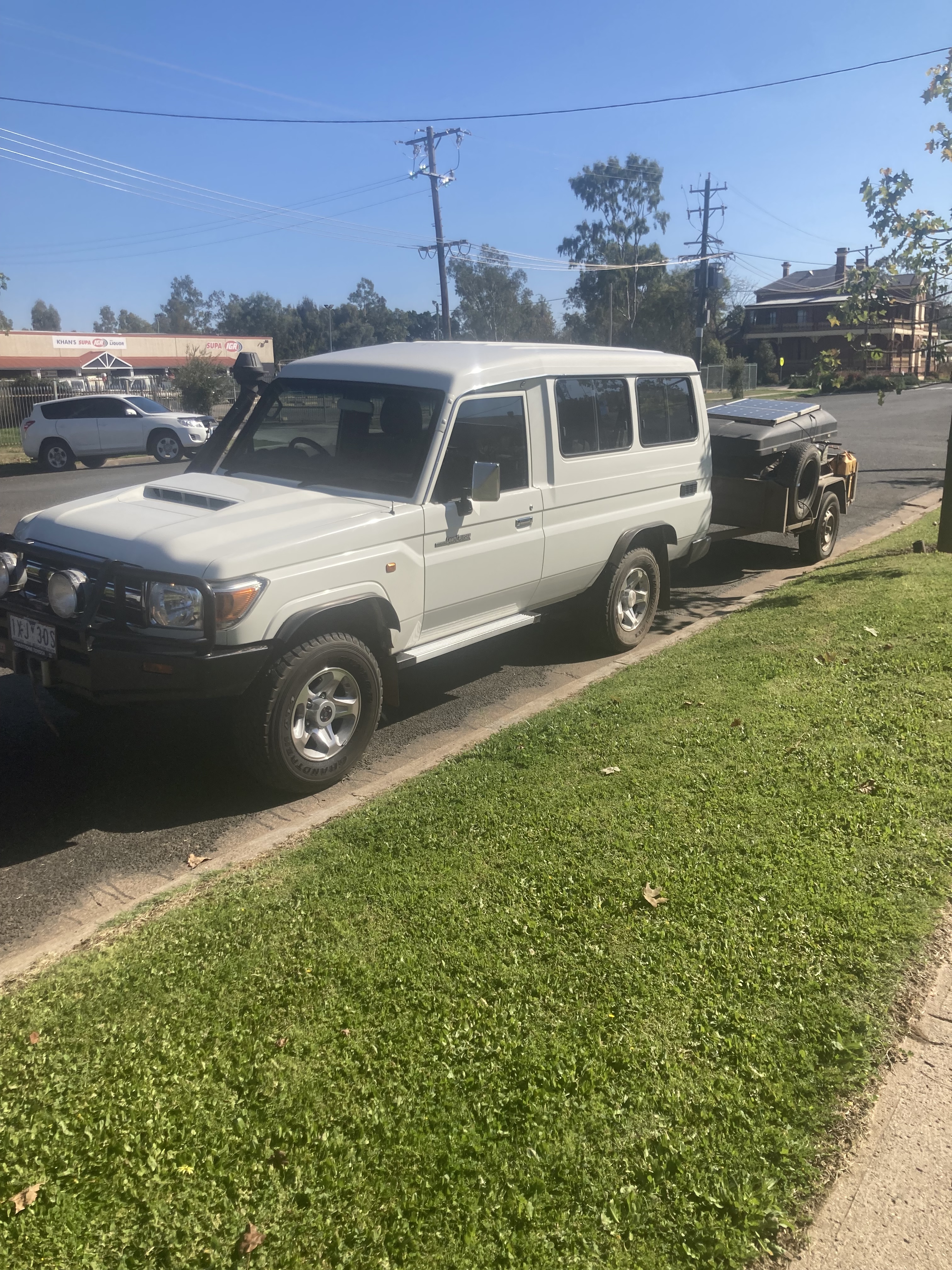
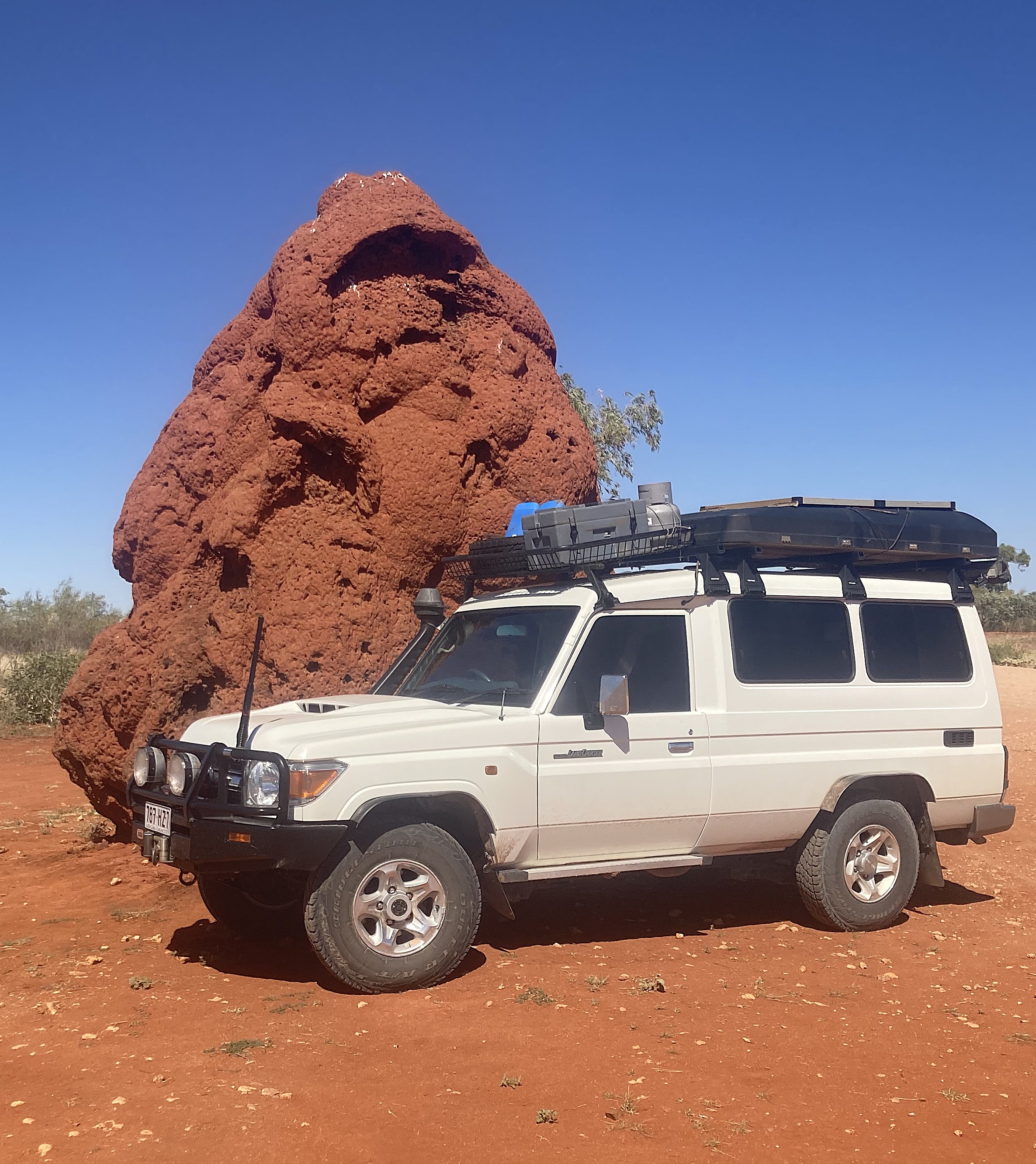
It had been quite a difficult few years for my poor cars since 2020 when I traded Snow White troopy in for a brand new 4wd Hybrid Rav and moved to Victoria, thinking I was done with touring. The Vic Alps beckoned and I quickly found that the Rav didn’t have the power, traction or clearance that I was accustomed to, so in 2021 I traded her in on a second-hand Toyota Fortuner, rather like a Hilux in drag. The Fortuner did very well, even towing a camper trailer up the Telegraph Track before I lost her to a flash flood out in the Gulf country. That story is in this blog. She was replaced by the only 4wd available in Mossman, an older Nissan Pathfinder for towing the camper-trailer, which managed a few trips including K’Gari , before I took it across to Purnululu and down the Tanami. That was the trip where I finally realised that I hadn’t outlived my need for a Troopy and continued down to Victoria to trade it in for a newish Troopy. Now called Snow Bird.
After driving her back to Mossman, I wanted to test her out on some outback tracks and realised that I could go down to Vic for a Monash Bushies reunion as well as catch up with a pen friend out near Oodnadatta, and my Corryong house was vacant. The Hay River route south through the Simpson Desert was beckoning again as I had enjoyed that run in the old troopy in 2020. That story is here as well.
The route proper starts at Batten Hill Camp, 75 km south-east of Jervois station on the Plenty Hwy, and I booked to stay 2 nights when I applied for my transit permit. The permit came back approved but with the note that major renovations were needed at the camp and I would not be charged for the stay.
I topped up my fuel at Jervois, as it’s 1000 kms to Innamincka for my next fuel stop. That gave me 160 litres at 12 litres/100 km. That should give me about 1400km of range provided the car doesn’t chew up more fuel on the sand! Fingers crossed I headed out to Batten Hill, arriving at 1 pm to find it badly run down. That was really sad as I had had a pleasant stay only 3 years before. Termites had destroyed all timber in the toilet and shower blocks and no water was running from the camp tank. I moved on down to a riverbank site near the Dingo Well research project.
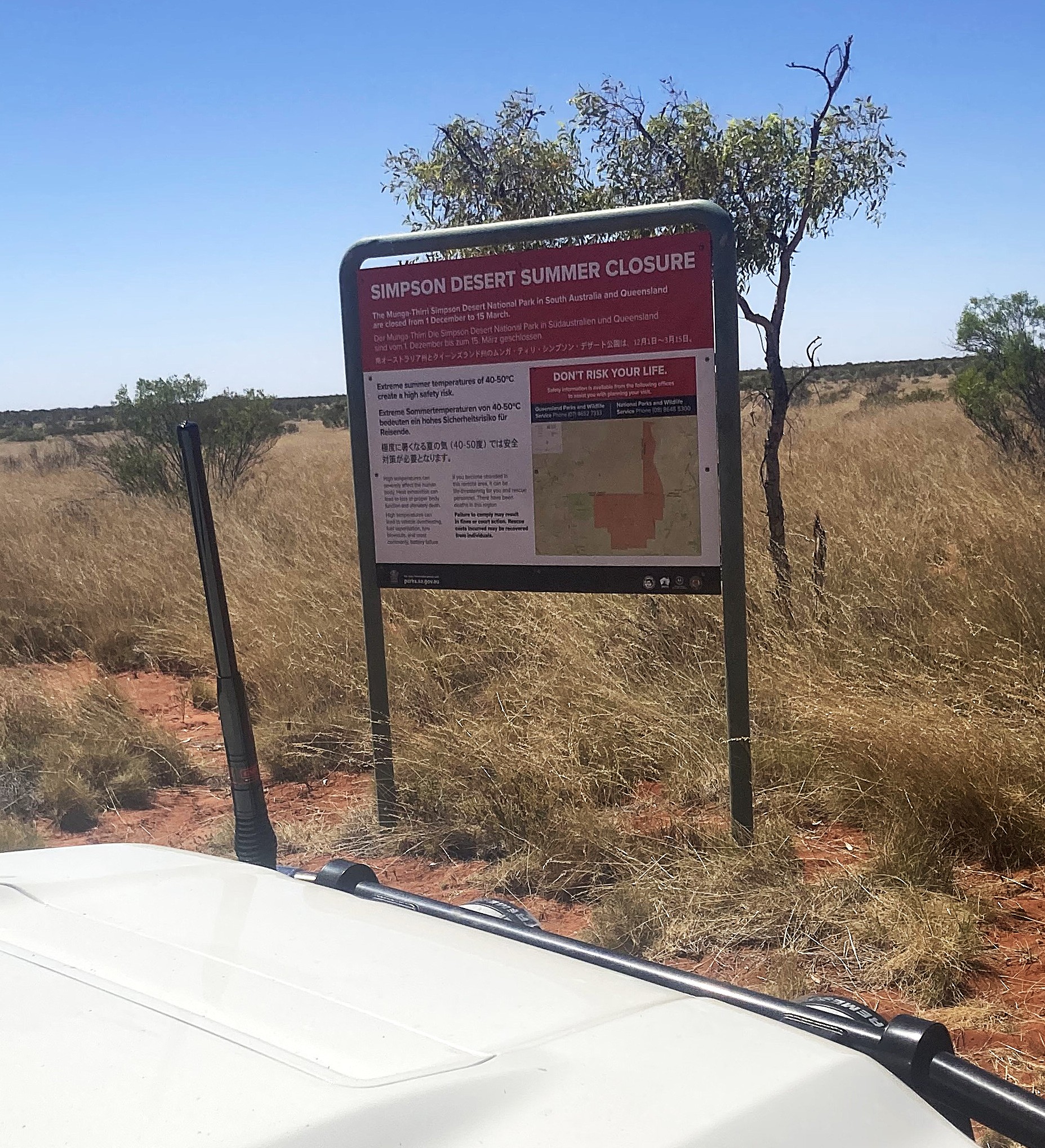
23rd August. The Hay River in this area is either a braided yellow sand stream or a 50m wide sandy channel. Debris from wet times is everywhere, but there was no flowing water or even pools left in the sand. The track runs more or less alongside the river, through eucalyptus woodland with an understory of bushy acacia. I was able to cruise at around 50 kph in 4th gear.
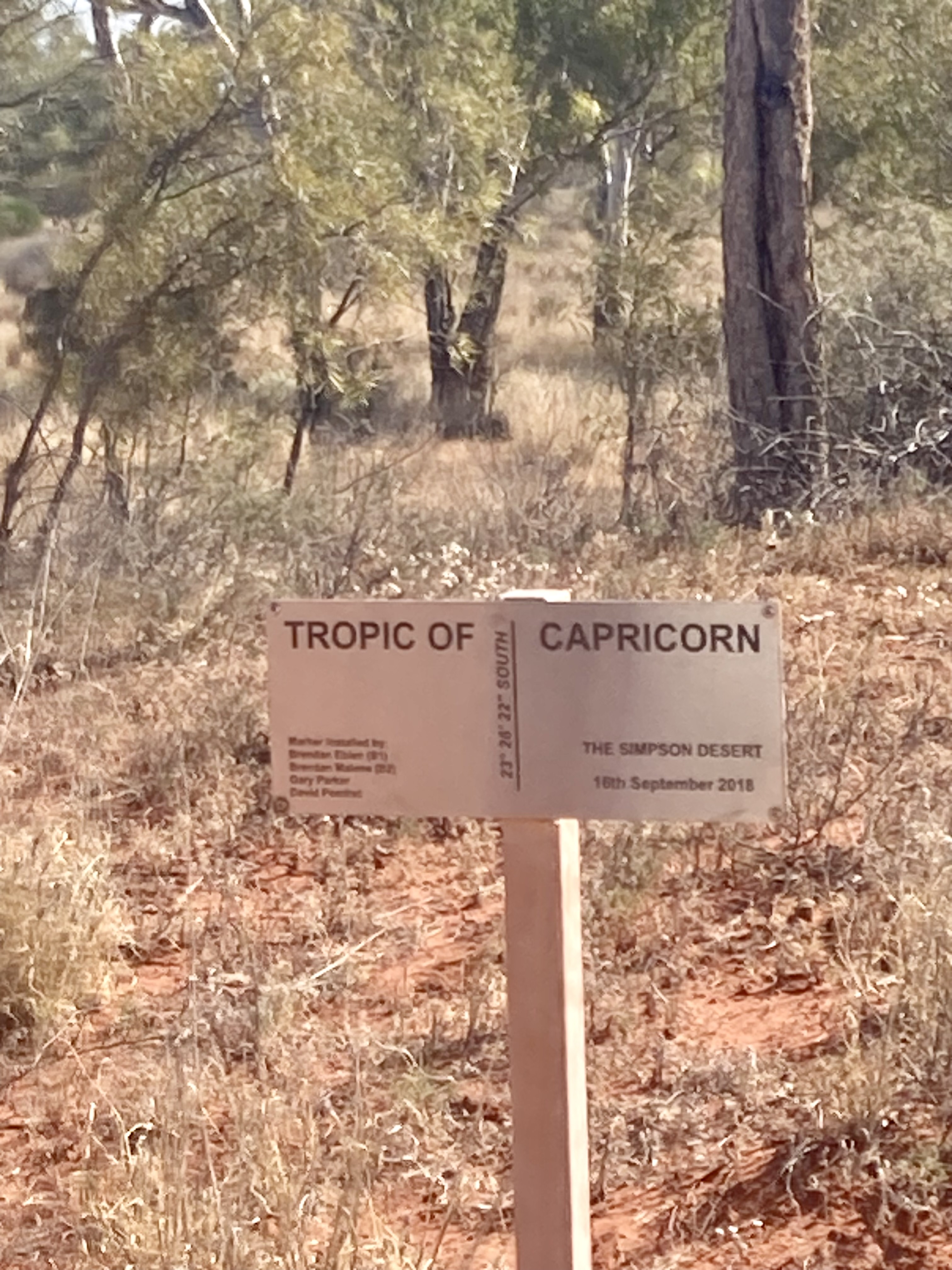
As you go downstream, the river actually gets smaller, going from 10 channels down to two before disappearing altogether. The track in trying to follow it, twists and turns with abandon. Old routes down various channels have eroded or collapsed and bypasses have been driven around bypasses. It was slow and tiring driving, down to 30 kph and constantly changing gears.
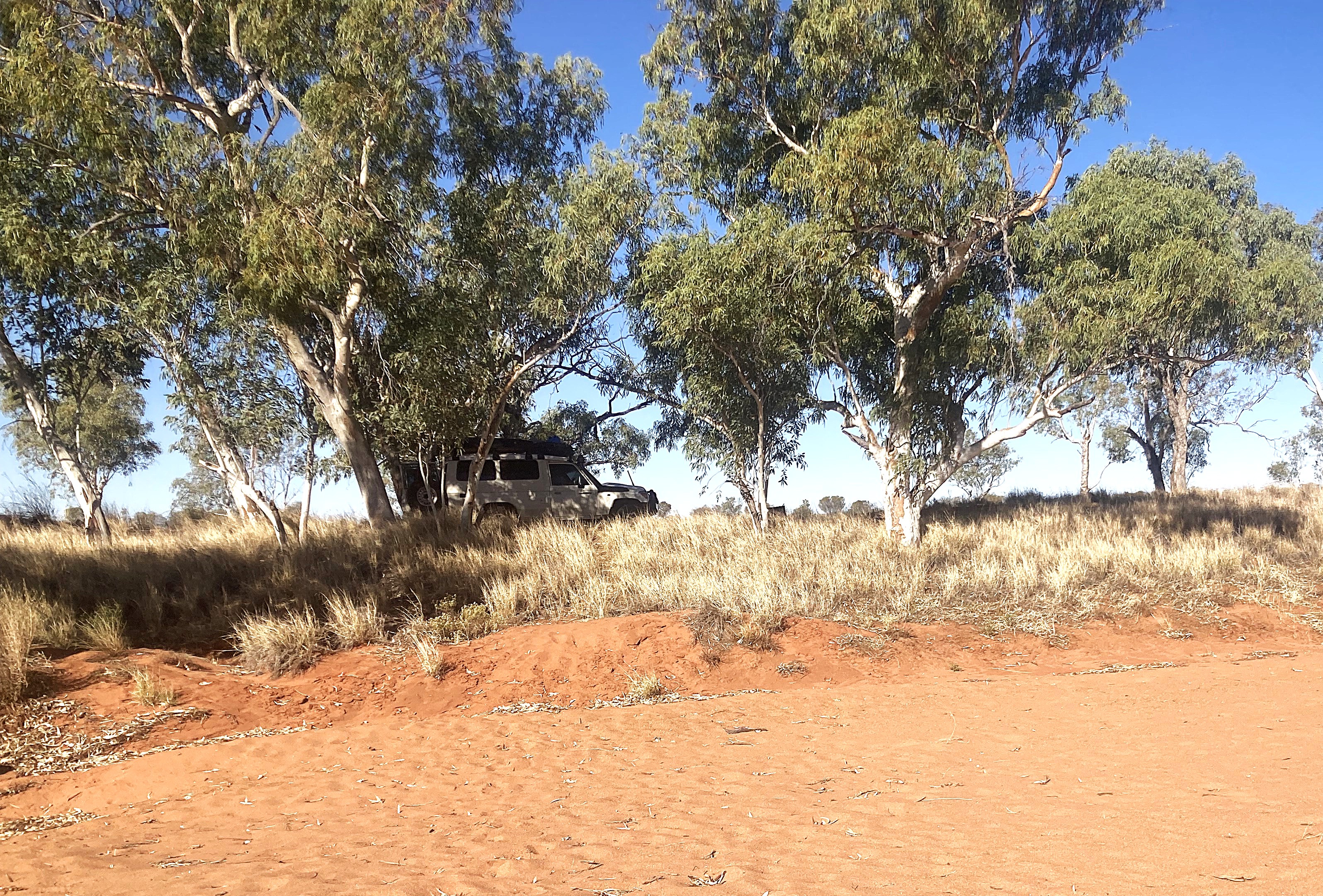
At about 100 km downstream from Batten Hill, all sign of a river has gone, the water all going underground to the aquifer feeding Lake Eyre. The track ran down the swale between small red sand dunes. I was forced to slow down again as the sand track had developed a series of hummocks, each flicking the rear of the car into the air as we crossed over. By the time I reached the Madigan Line western turnoff, there were only scattered clumps of trees, with spinifex dominant on the ground. I camped about 200 km from Batten Hill, tucked up next to a dune by the roadside. There was some breeze, but flies remained a major issue, with it not being possible to sit outside until well after sunset. The roof top tent is fly proof and quick to erect, so I can stop, push it up and dive in for a nap in the late afternoon.
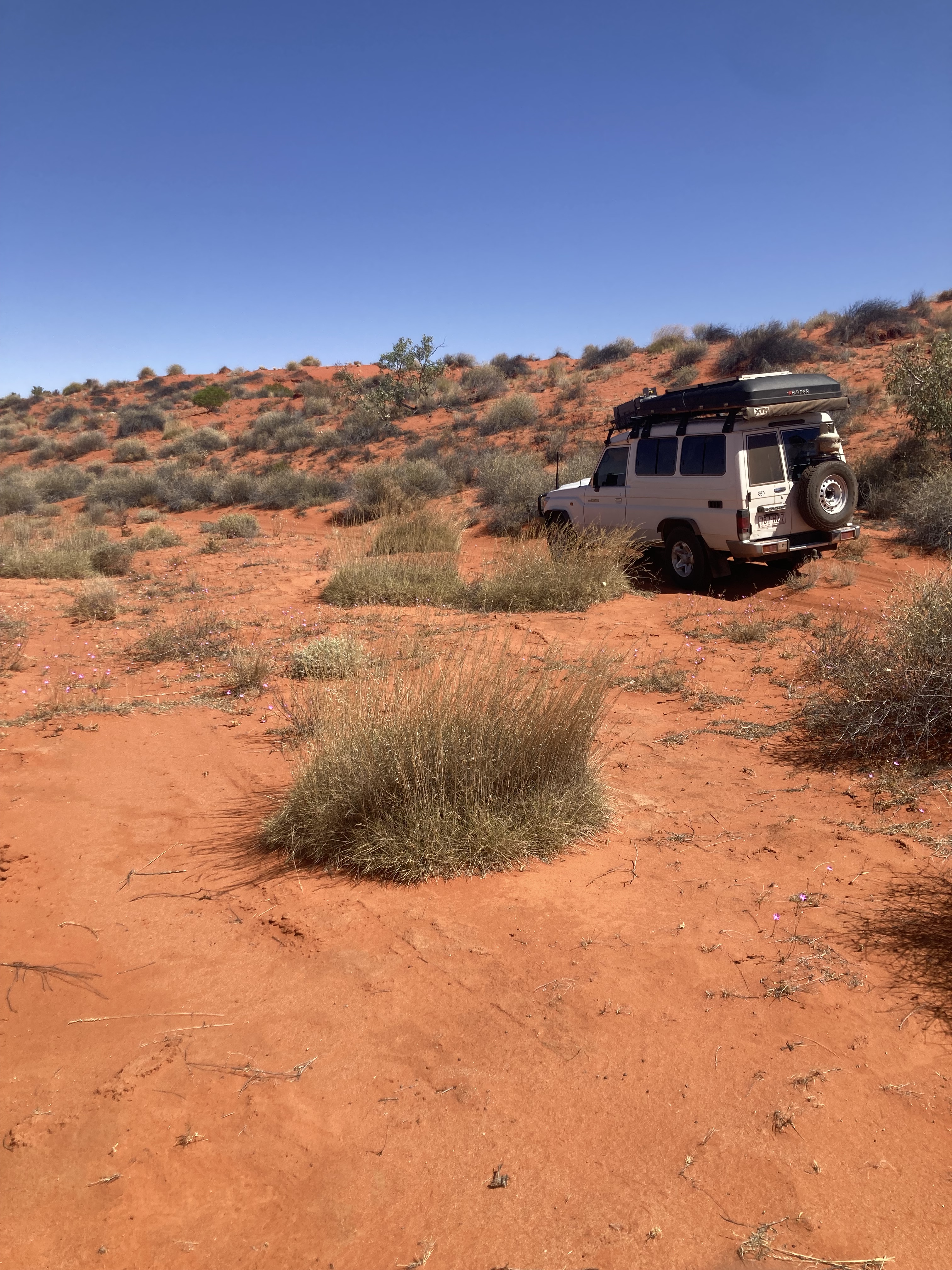
24th. The track to this point had run due south, but 20 km after my camp, it started to swing to the west, and that means it has to cross the dunes running north/south. There were only about 40 dunes to cross, so no drama really, provided I was in the right gear and in 4wd. Mistakes meant backing down and trying again. The V8 had ample power to push through and I hadn’t even let the tyres down. I called ahead on the radio a few times, but I was on my own again today.
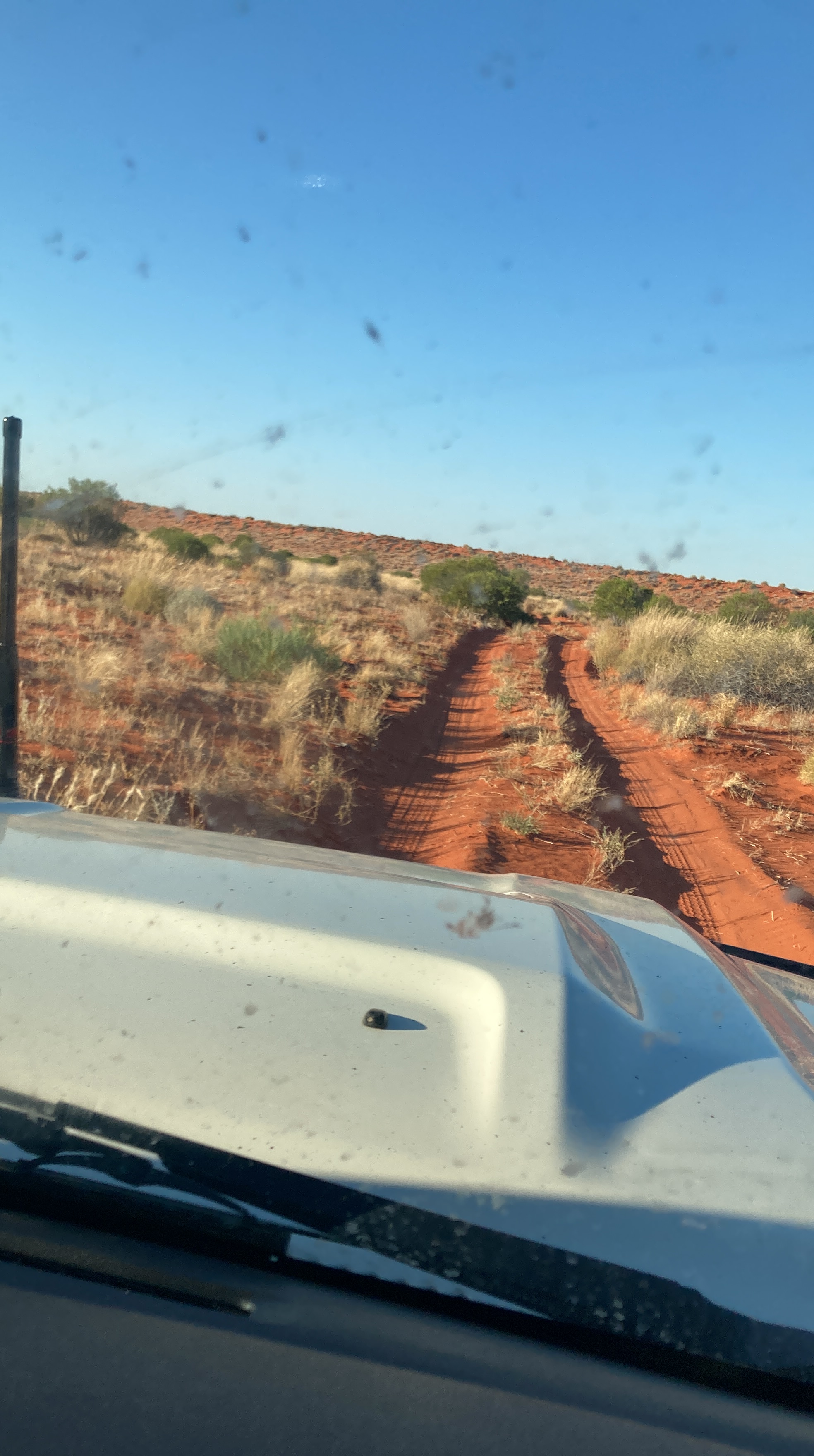
The joy of finishing the dunes was enhanced by discovering a rig road built for the next 100 km south to Poeppels Corner, where SA, Qld and the NT all come together. The road was made for the drilling rigs, but once the drilling ceased, there was no maintenance so although the surface was mostly quite good hard clay, you have to keep a keen eye out for washouts and ruts which could destroy the cars suspension if hit too fast.
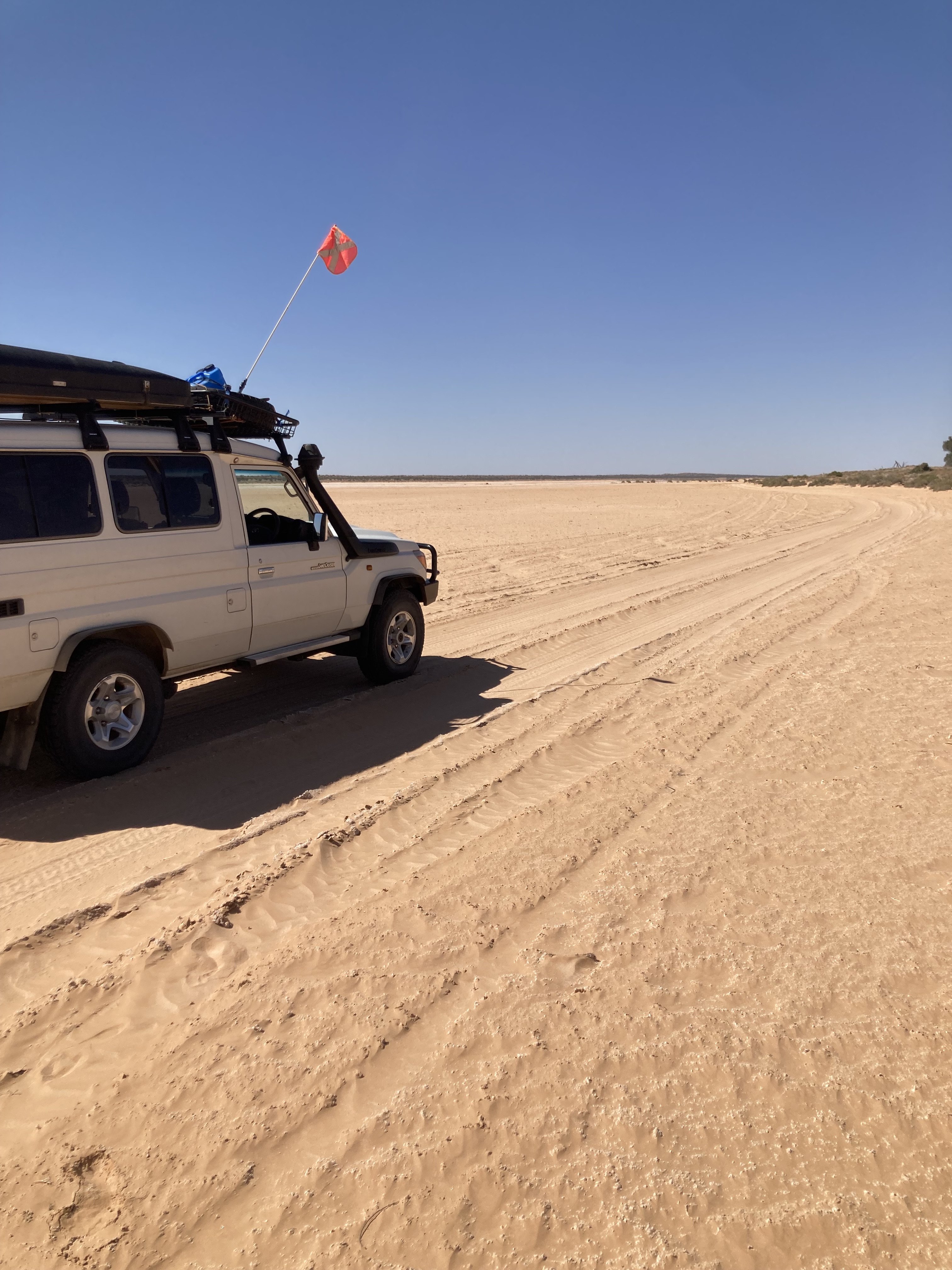
A large part of this stretch was along the shore of a salt lake, so most cars appear to leave the track and drive the lake bed at speed. I had been to Poeppels Corner several times, so didn’t bother this time as it would require deflating tyres. I continued past the QAA line (to Birdsville), and the French Line (west to Mt Dare station), to keep going south on the K1 line through to the Warburton Crossing near the Birdsville track.
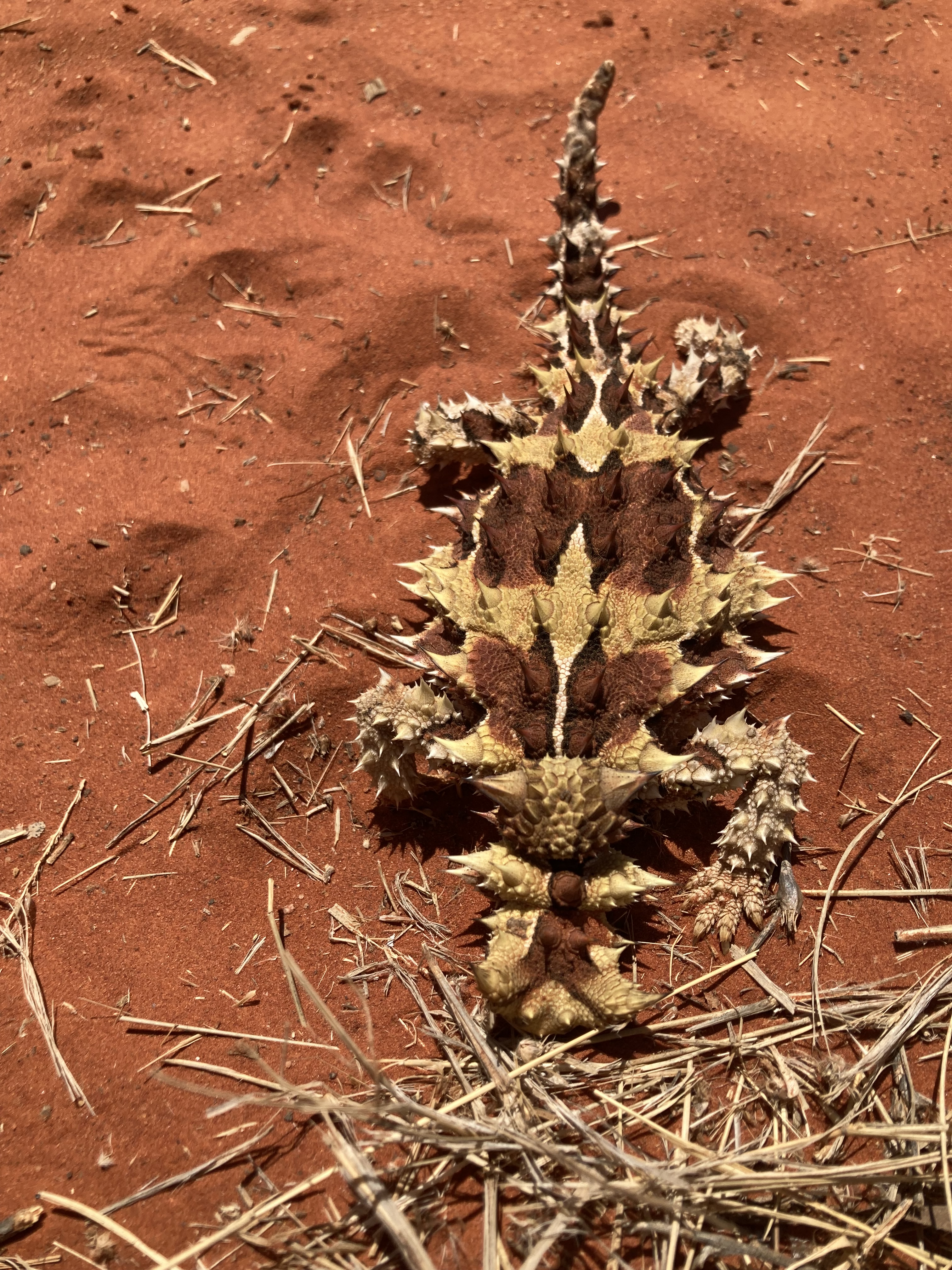
The red sand faded away after some dune crossings, to be replaced by a blinding white sand, with the only colour from washed out spinifex and saltbush. K1 also follows salt pans, but the lake surface was quite soft, so I stayed on the track alongside. Many deep gullies crossing the track made life interesting, having to ease gently down steep drops and claw back up out. The track met another rig road coming from the west, and from there the dunes disappear with the surrounding country dead flat to the horizon. The National Park is left behind and cattle are again evident, with considerable degradation visible in the vegetation and soil.
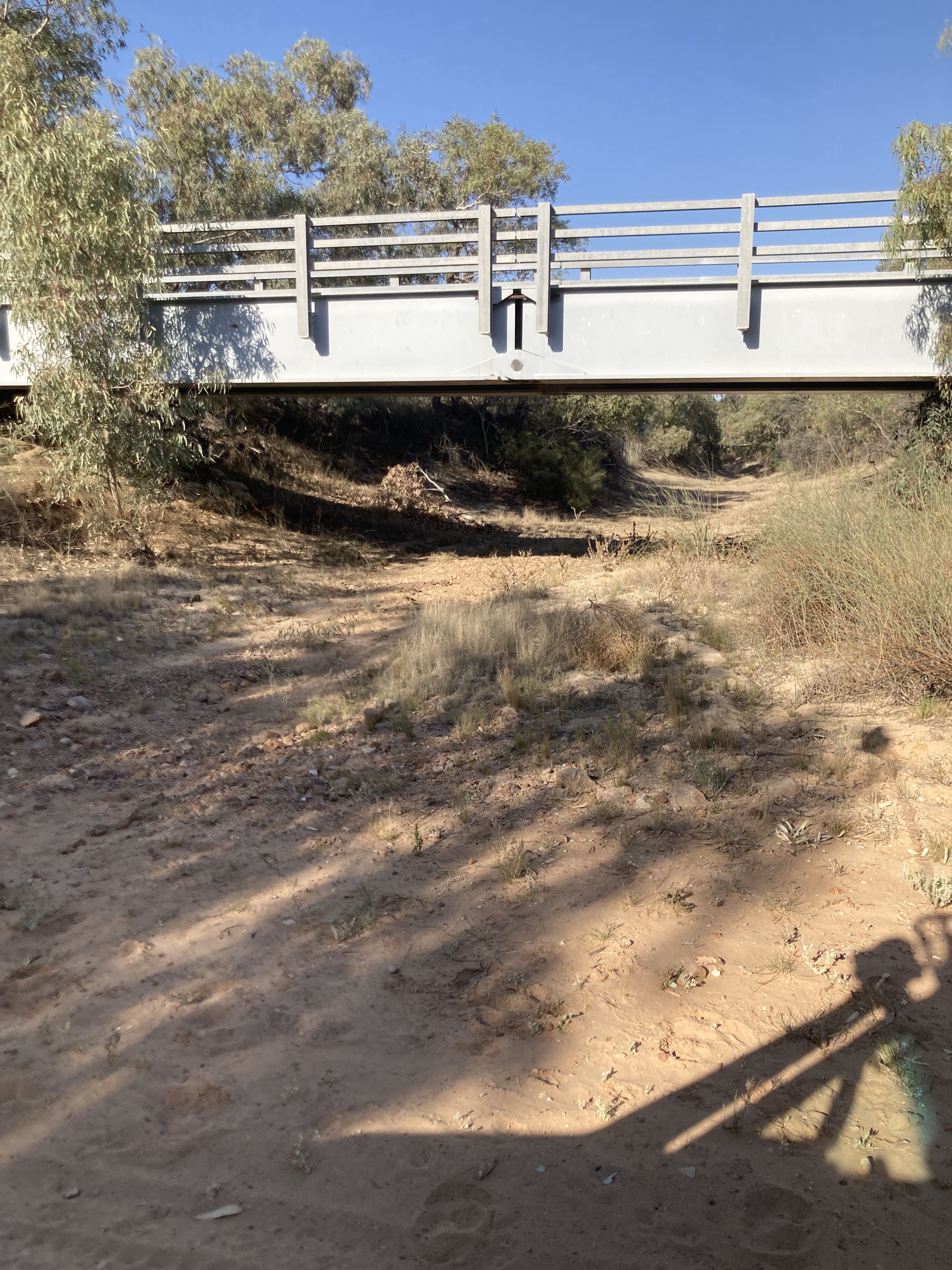
The Warburton Crossing was about 5 m of brown muddy water, on a hard base, so no drama at all for the final stretch to the Birdsville Road.
I had to drive north towards Birdsville for about 75 km to the Walker Crossing track, but doing 95 kph on a good road. Not the Birdsville track any more. Fuel consumption had been very good, with the first tank running dry after 650 km. I still had 500 km left in the second tank, with 200 to go. Should be fine if I don’t get lost.
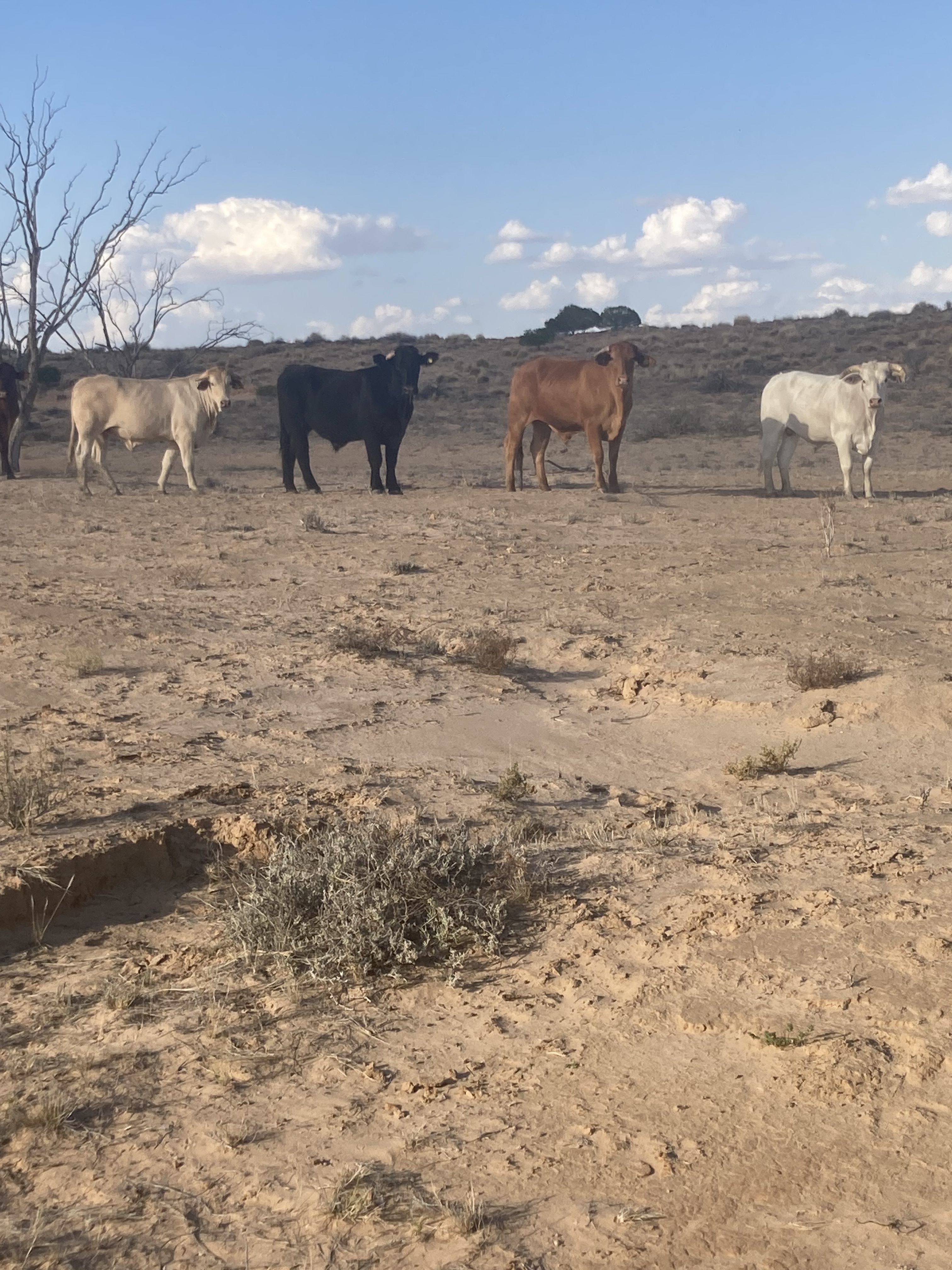
I camped about 25 km in on the Walker Crossing Road. Flies were awful, as cattle were around. It had been a long day of about 400 km but it was simply not worth stopping to hide in the tent.
25th. The drive from Walkers Crossing was very confusing, with active drilling rig roads going everywhere. I had to turn around several times as the road to Innamincka would be a faint path turning off a high-speed road. There were no road signs, apart from “No Public Access”. Which was useful at times. However, I made it through to Innamincka and the store. Fuel with fish and chips and wifi. Bliss.
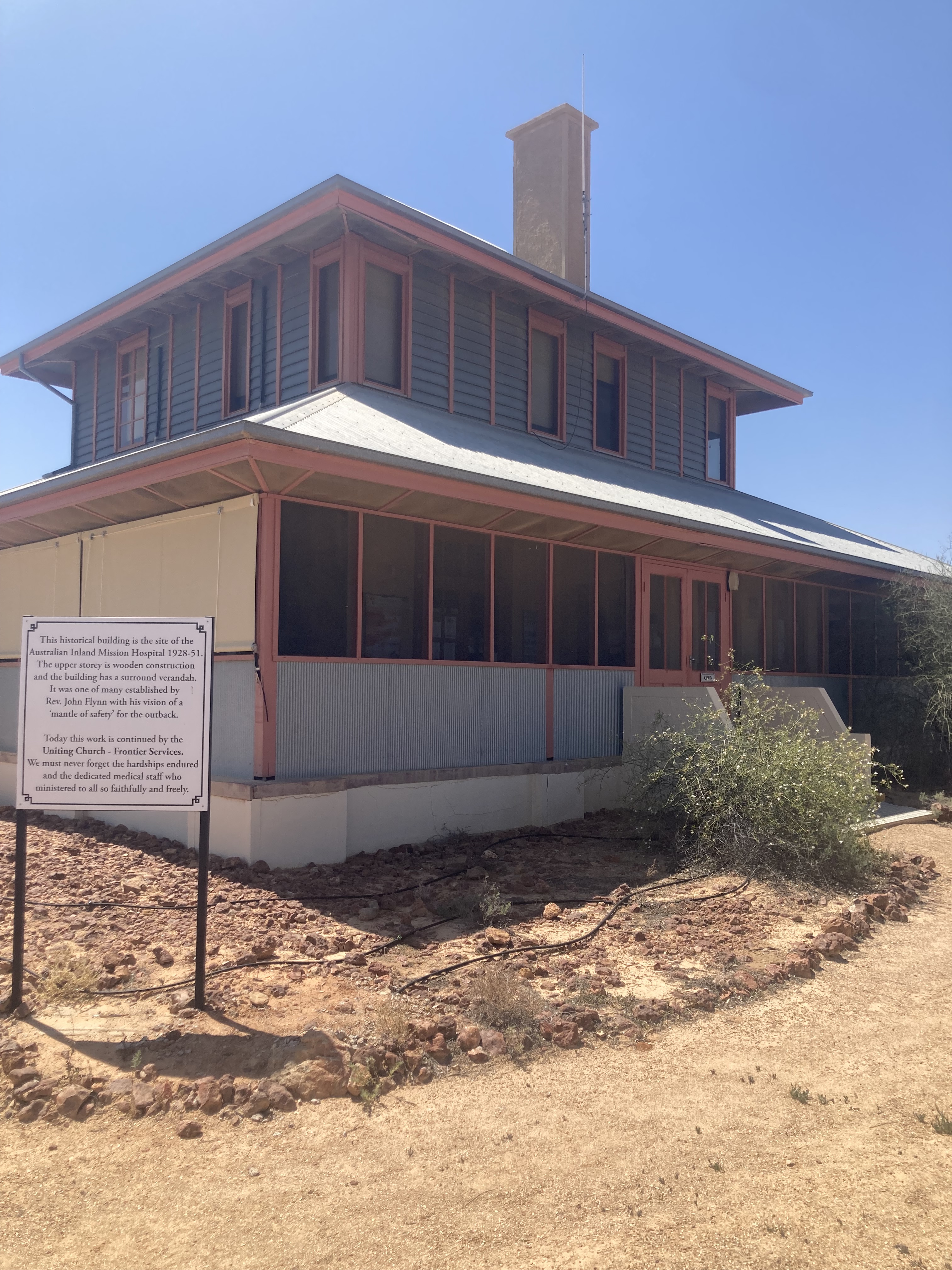
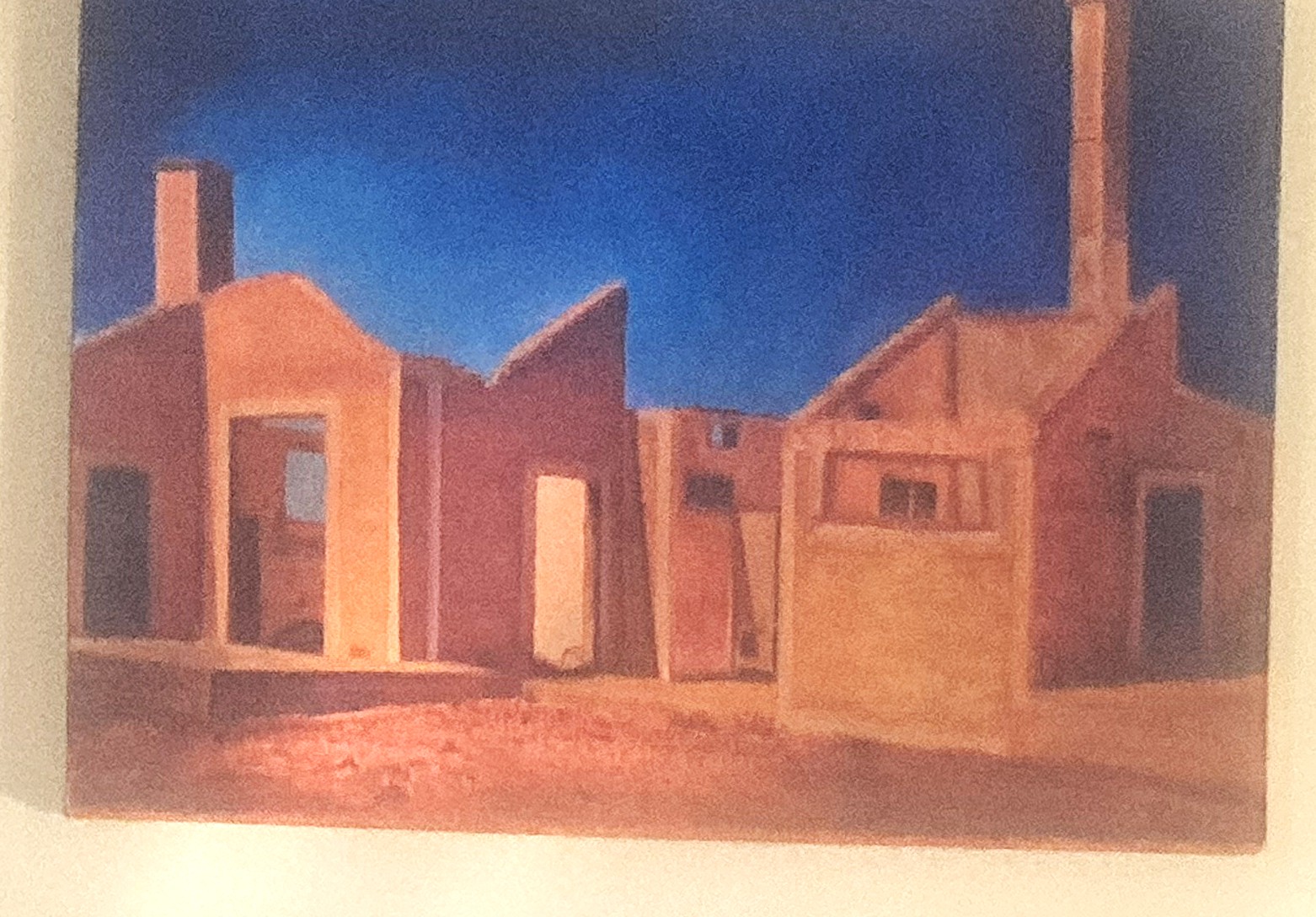
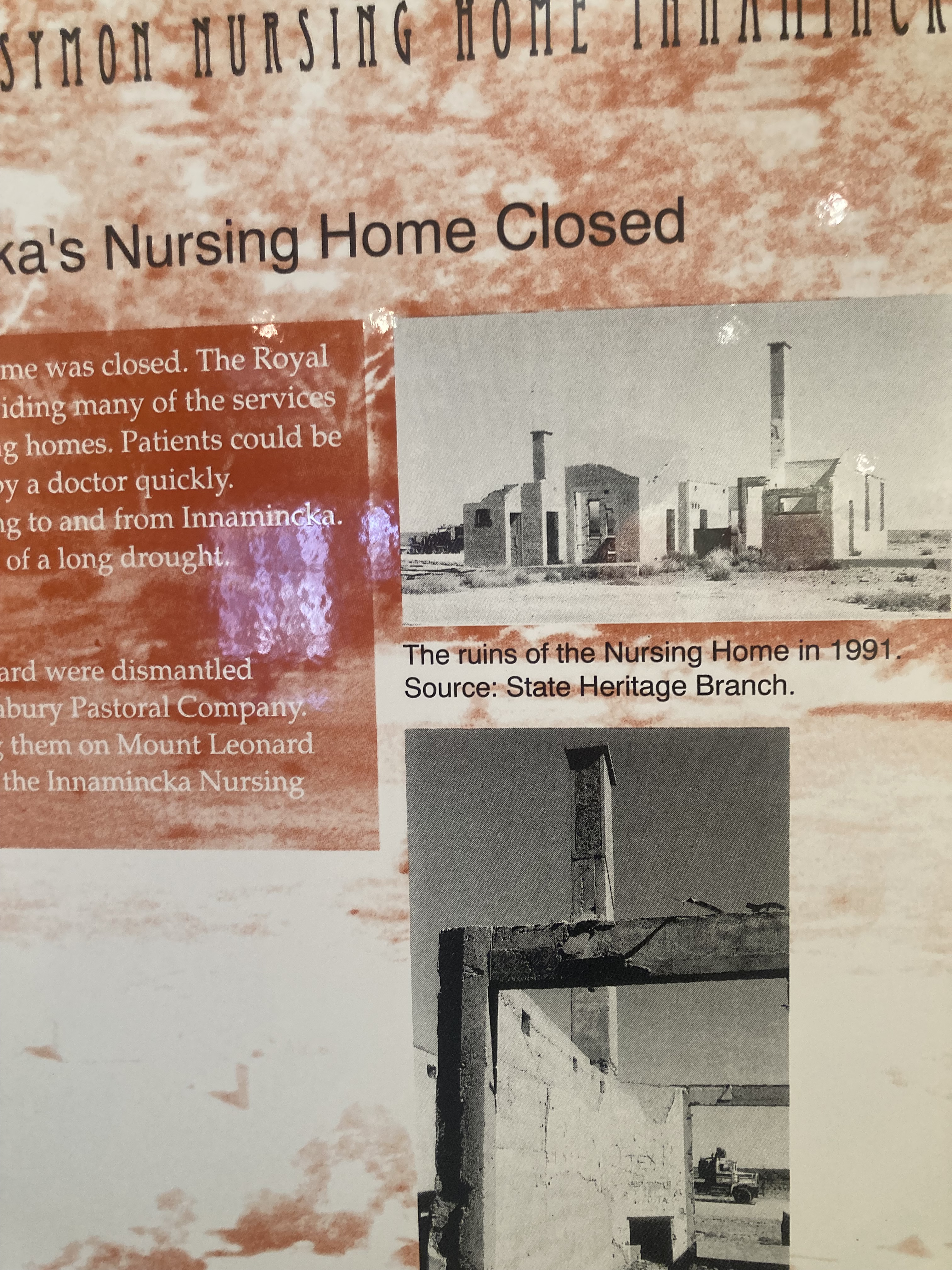
The surprise was that I couldn’t see the hospital ruin that is one of my favourite paintings from a photo Ali took in 1980, and is up on the wall at Corryong. It turned out that the ruin has been completely repaired to the original design and is now the Ranger Base and information centre.
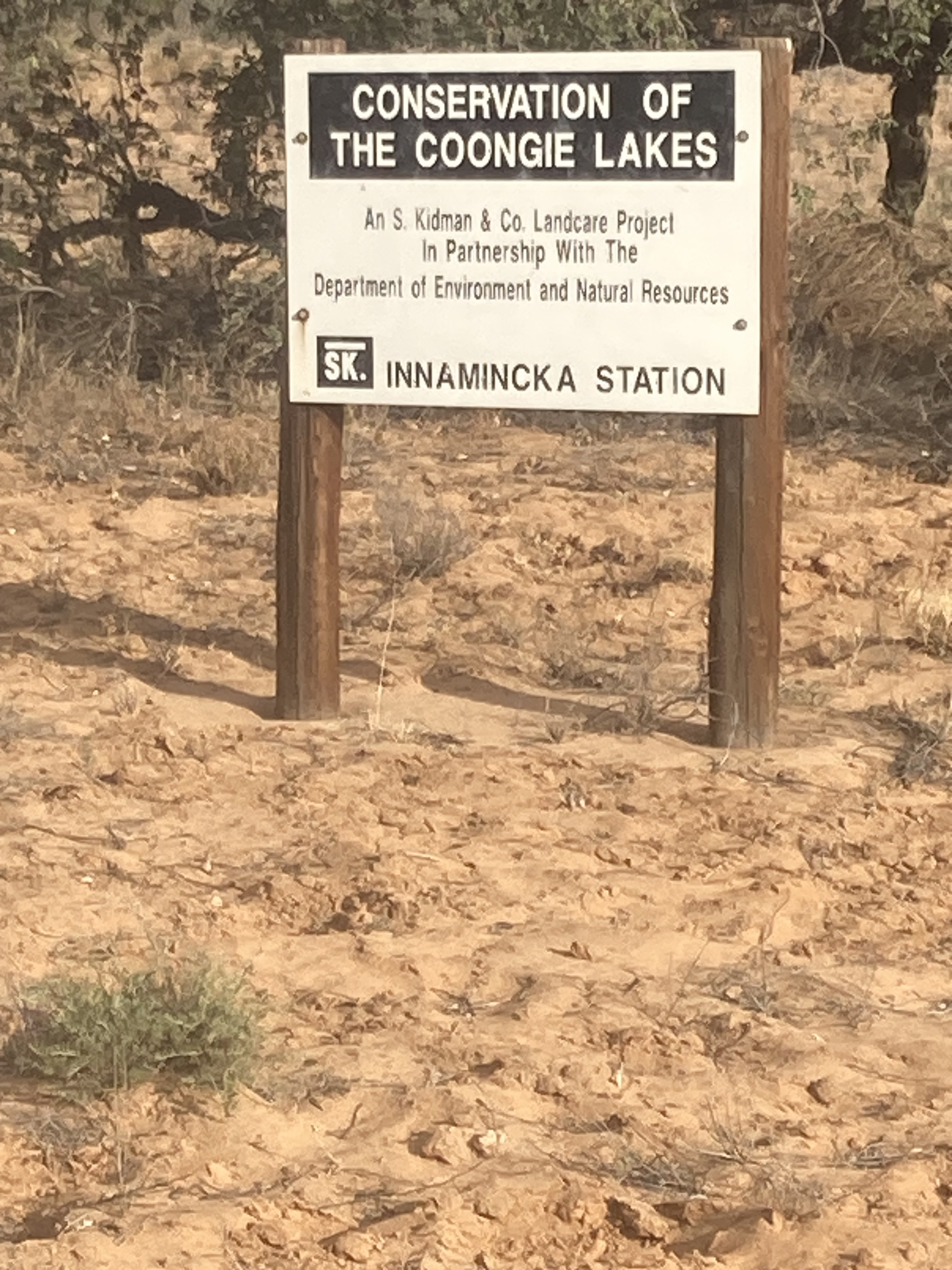
I booked a stay at Coongie Lakes and headed off, but I was tricked by Google into taking the wrong road, going 90 km out of my way before heading back to town. I rolled into a lovely shaded spot on the bank of a small stream around 5pm.Flies were still bad as there were still cattle about, but I was able to sit outside. Coongie Lakes is a National Park, but as for many of the desert parks it is really just a Notional Park.
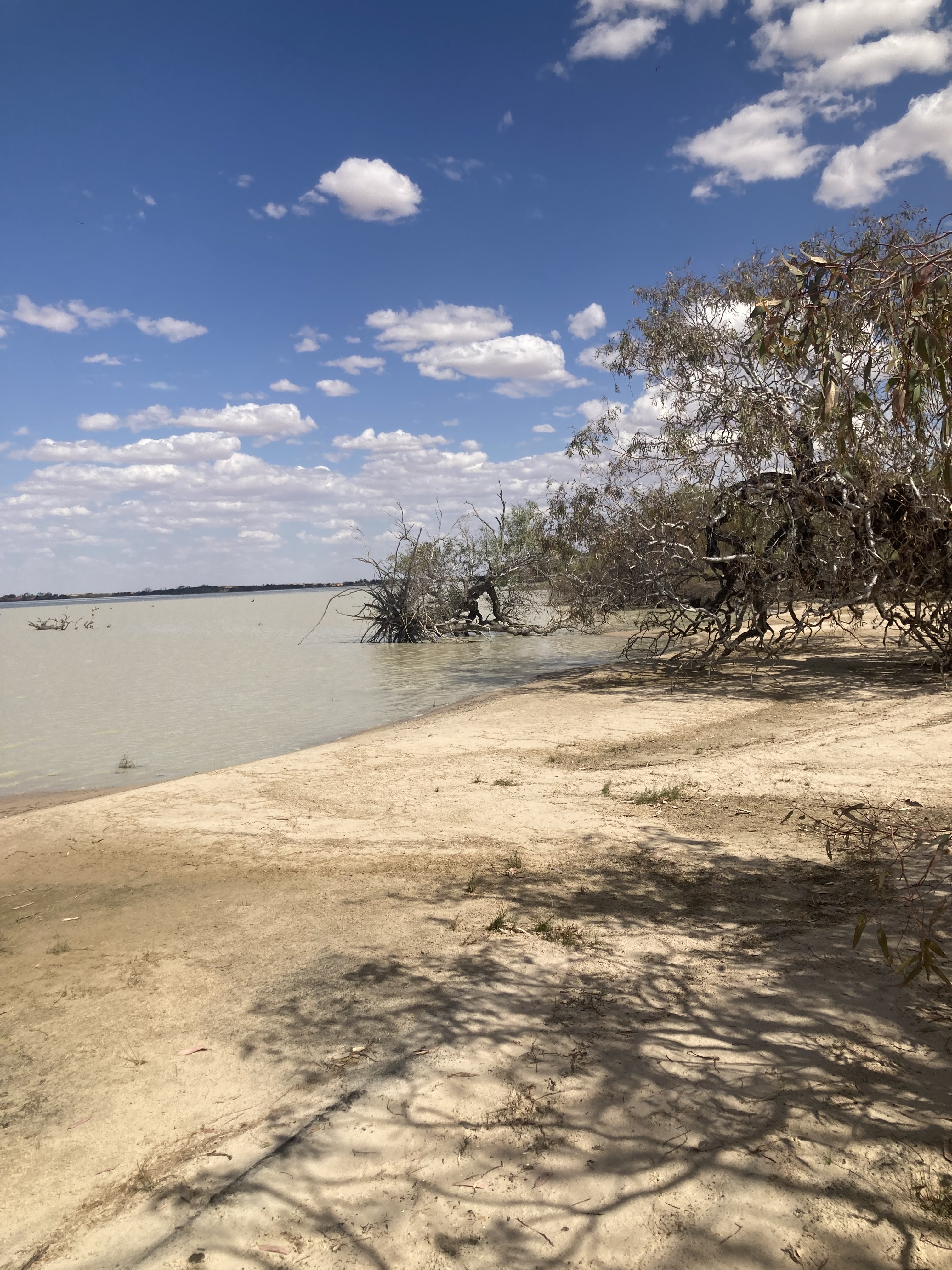
26th. I had a good rest day in and around the main lake. I walked a km or two clockwise, giving up on dry feet after a bit and waded often ankle deep in grassy swamp. The waterfowl were very touchy, taking off as soon as I appeared. But I still managed some good sightings. A couple of older men travelling together in a rental came by with a broken fridge lead, which I was able to repair for them. They were camped on the lakeshore in the other direction, so that took me the afternoon to wander anticlockwise and chat with them for a bit.
Spits of rain after sunset had me rushing to clear things away, but nothing more developed overnight except it stayed warm with the cloud cover.
27th. I was packed and rolling by 6:30 but went past the men’s camp to say goodbye, then on to the end of the lake shore track. Back to Innamincka with rain spitting, but not enough to even settle the dust.
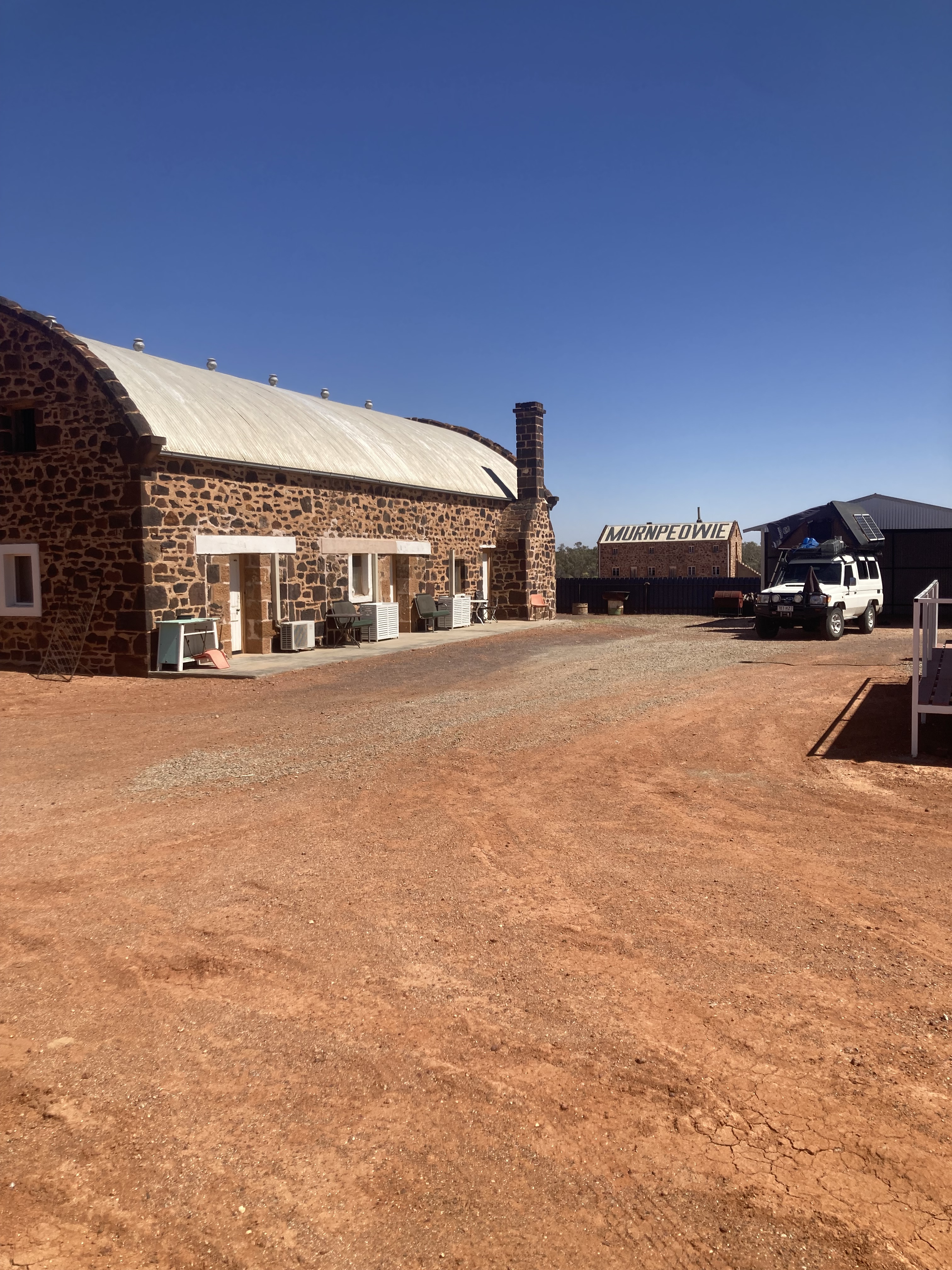
Refuelled and caught up on the phone to Kerry, maybe to meet up in the Flinders in a week or so, and Jenny at Murnpeowie station, a couple of hundred kms to the south on the Strzelecki Road. Then south through the Moomba gas fields, with over 100 km of the road sealed. I had lunch at a roadside stop at the turnoff to Murnpeowie, then in to meet Jenny. She was there by herself as the family had gone in to Port Augusta for a funeral and were returning from Hawker later today. I was to sleep in my tent with access to a toilet, shower and laundry, but eating with Jenny in the main house.
I had a really good session with Jenny, and we got along quite well, but no sparks. We had a good look around the property on a 5 km walk each morning. Very historical place, with beautiful stone buildings very well maintained, And it is certified organic beef production.
29th. I left after a couple of nights, as I couldn’t see myself being useful and didn’t want to impose on the owners beyond that. They gave me several kgs of meat, enough to keep me for at least a week at my rate. Jenny was to stay on at the station for another month as housekeeper, before continuing over to WA.
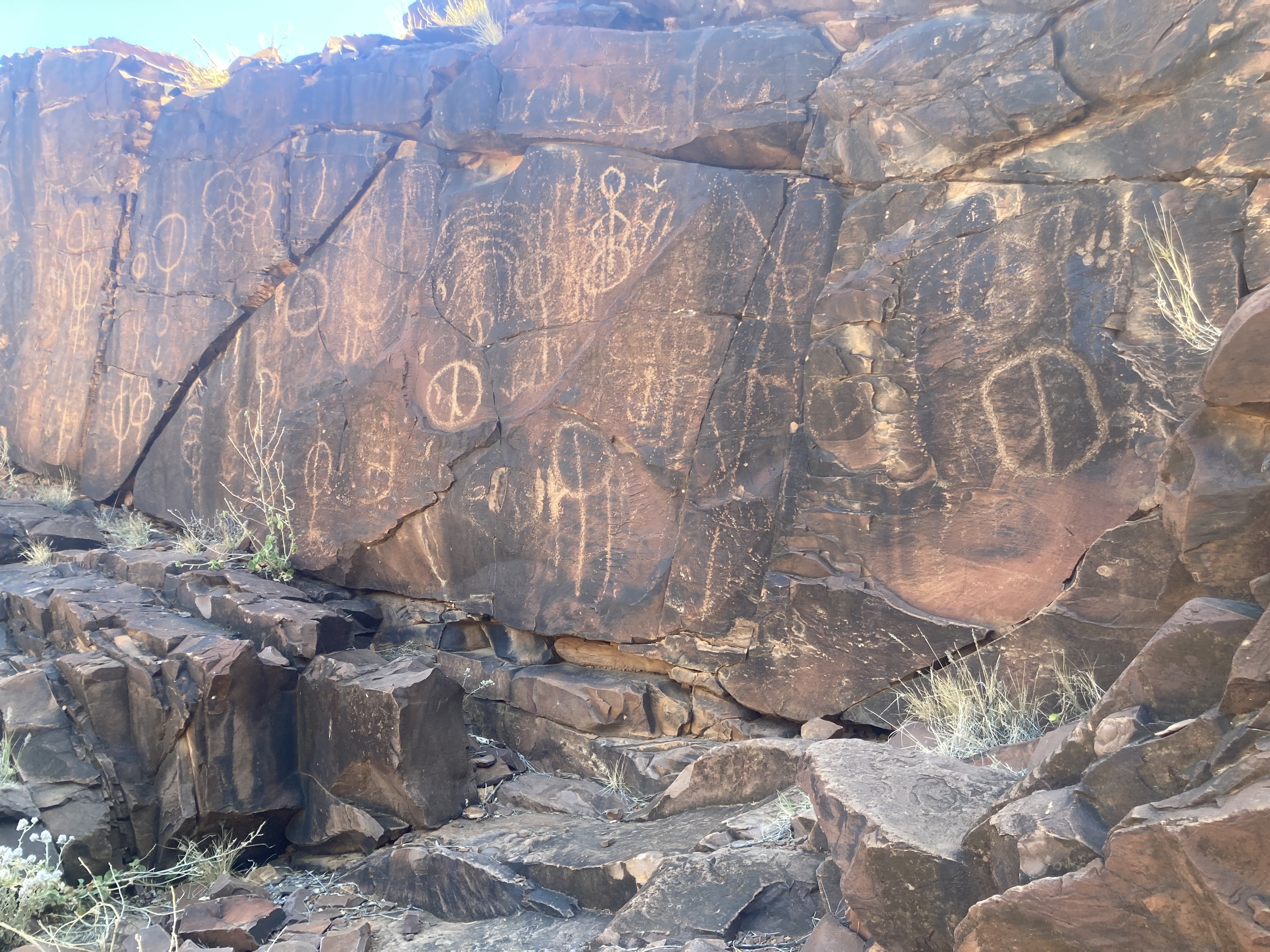
On south again past where my old troopy broke down in 2020, and had to be towed out. Now a sealed road all the way. A quandong pie at Copley and out west through the Gammon Ranges. Campsites on offer were not attractive, so I kept going south to a favourite spot at Mt Chambers Gorge. Sixty years ago, it was just lovely. Now it’s been trashed by careless campers and thousands of goats. I can’t imagine that they are feral although there were long tailed sheep in with the herds, so they hadn’t been mustered for some time. Most of the big trees in the riverbed are dead. At centuries old, it’s hard to pretend that drought has killed them. There was still signage for the Aboriginal engravings up in the gorge, so they are still there at least.
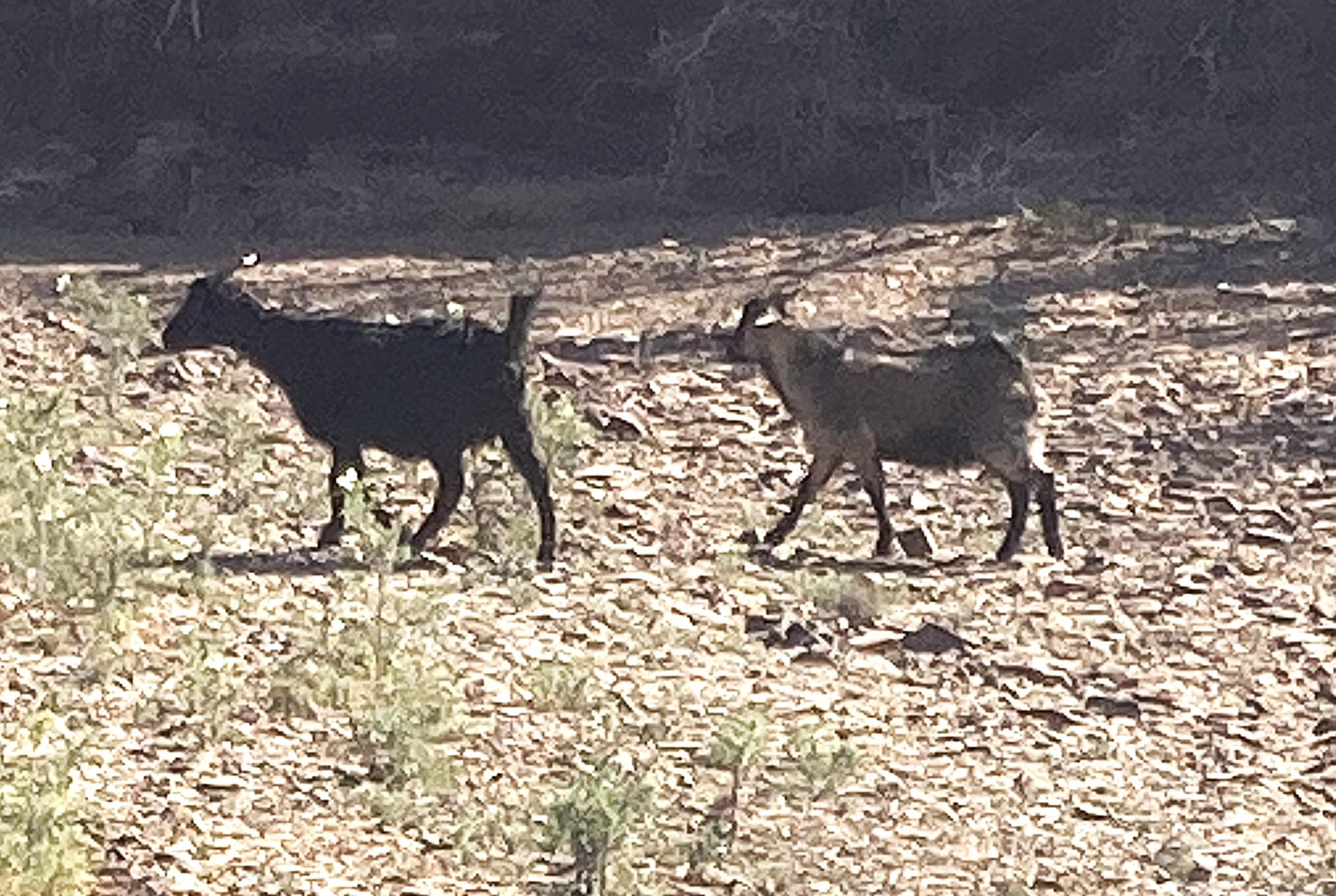
30th. Down to Wilpena Pound and a walk over St Mary’s Peak. I started walking at 8:30, which gave me the full heat of midday for the main climb. Very rough on boulders scrambling steeply up the escarpment to the main pound rim, then I followed the main trail to the summit. By then all my thigh muscles were cramping from dehydration, and I had no magnesium to calm them down. Once the spasms had passed, I was able to keep going down into the pound. On the flat land, the walking was straightforward to the old homestead where I was able to have a long drink and cool down. The park base had an IGA, so I restocked and drove south to a lovely camp on Native Well Creek. By myself with a Guiness and Telstra.
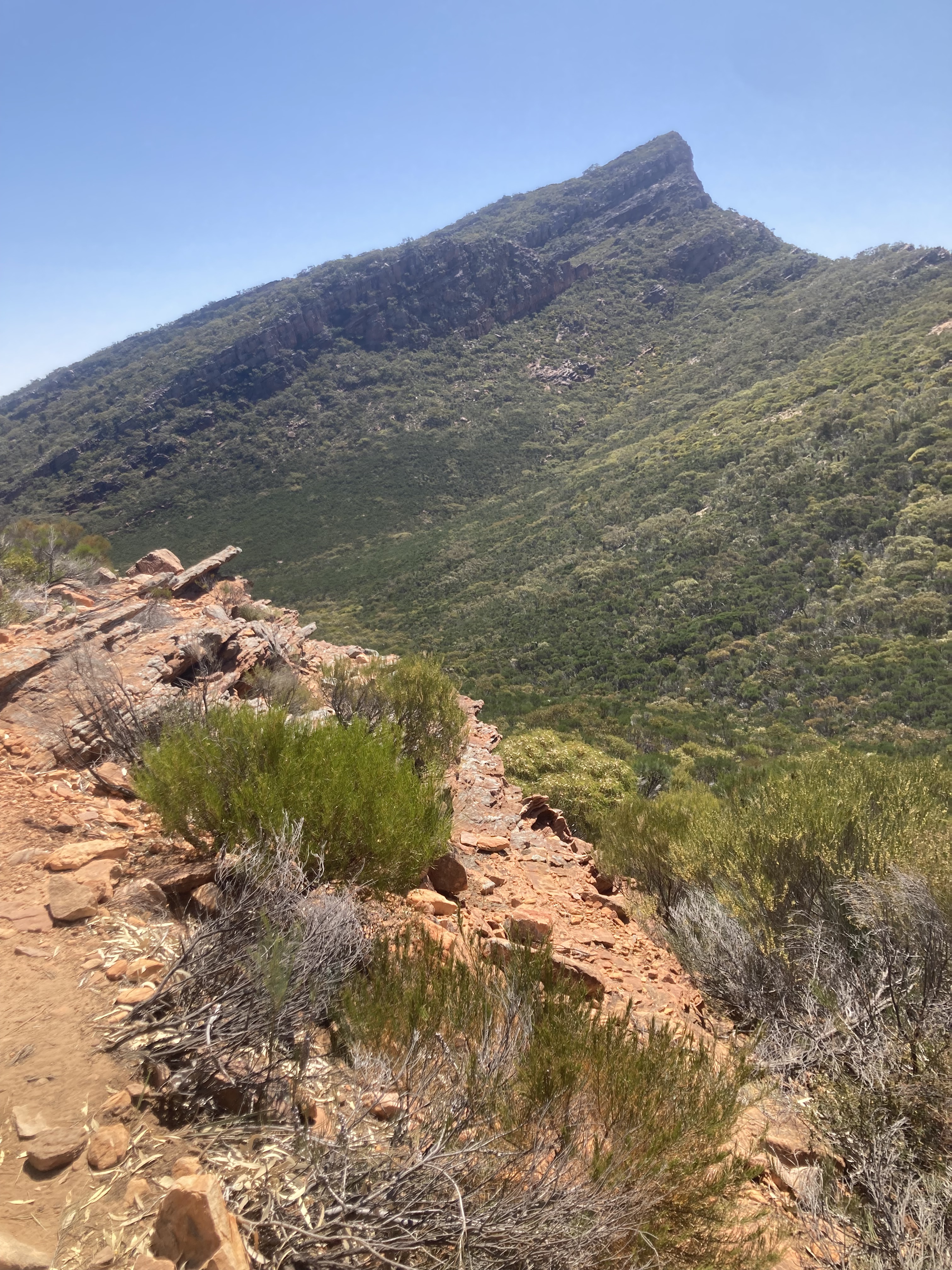
1st. In touch with Kerry, whose van had overheated and needed a new radiator. It was repaired in Mt Isa and she was planning to drive slowly back south. I decided to go north to maybe meet up if I could help.
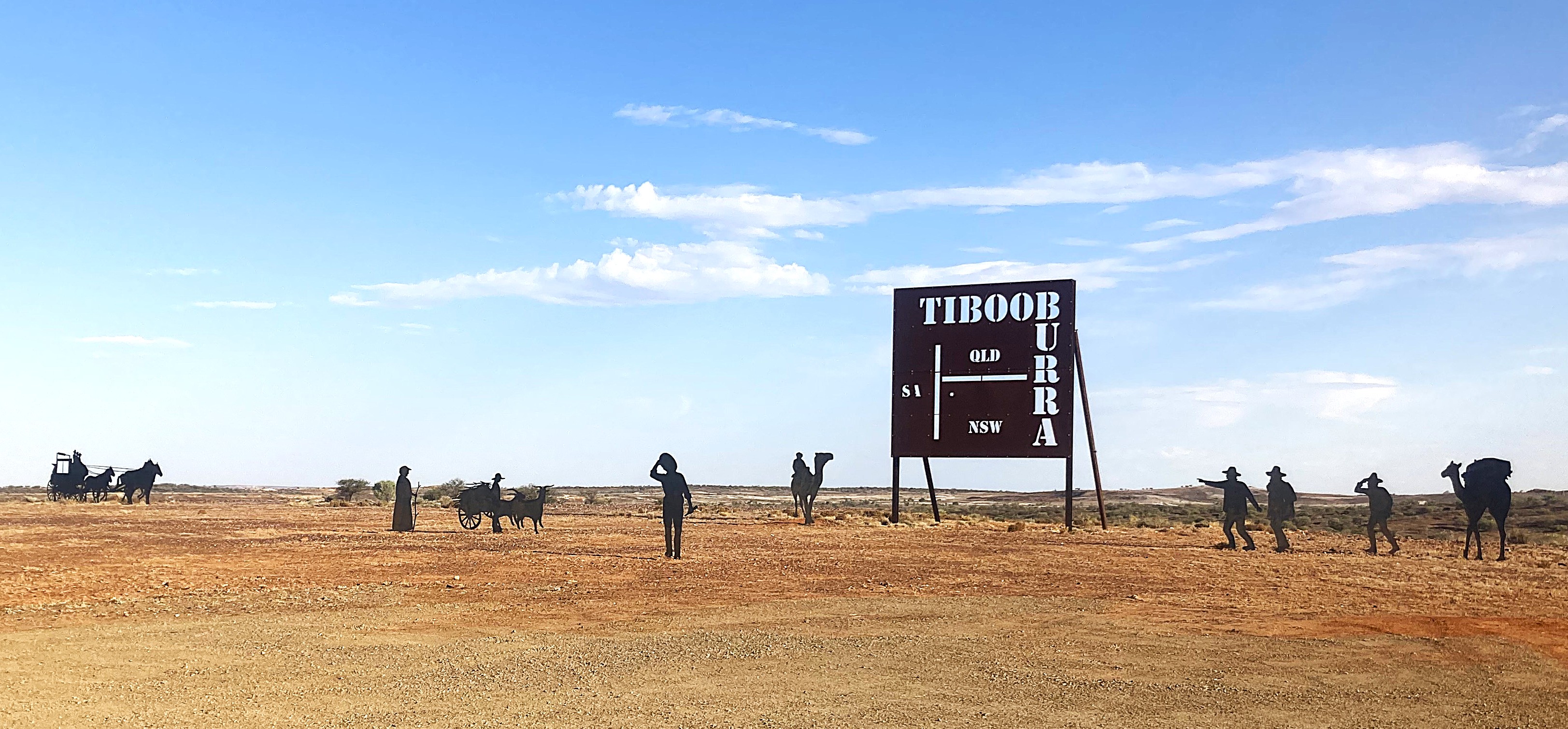
So, I had a bath and washed clothes before packing and heading east for Broken Hill. Refuelled in Peterborough and Tibooburra before camping near Warri Warri Creek, in Qld about 50 km north of the Warri Gate, which is in fact a gate. Continued north along the SA border, waving at the Haddon corner and Innamincka as we went past. Past Arrabina Station, all on good roads, so sitting on 90 kph.
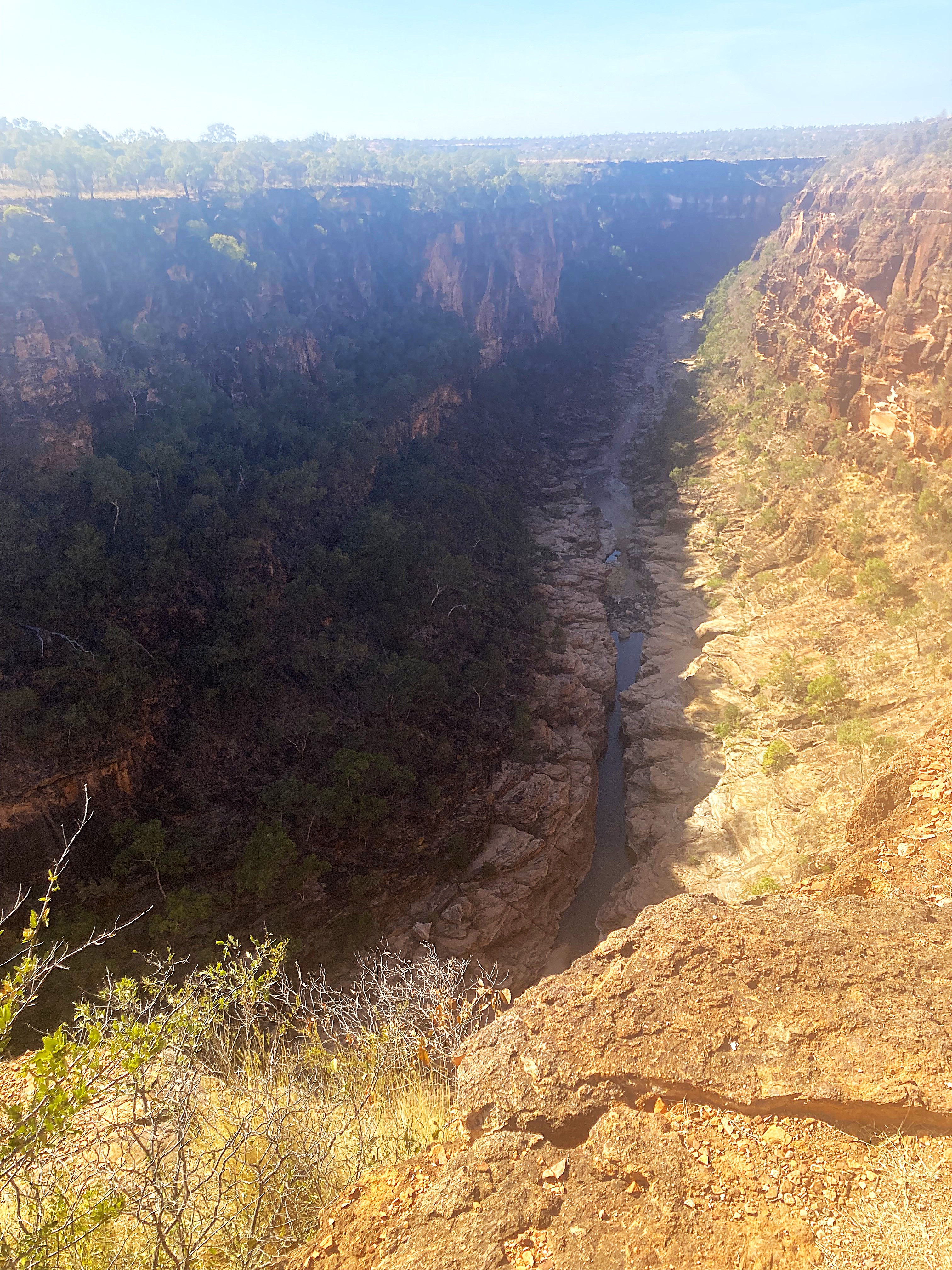
2nd. Waved at Windorah from a roadside stop with Telstra, but it was too far away to be bothered to go in for fuel. Continued up the Diamantina River Road to the National Park and a camp at Gum Hole by a pool with birds everywhere. I calculated that I had enough fuel to make it to Boulia with about 120 kms to spare. Then I went off on a tour of the park and used 80 of that by not being careful enough to check distances. Oops.
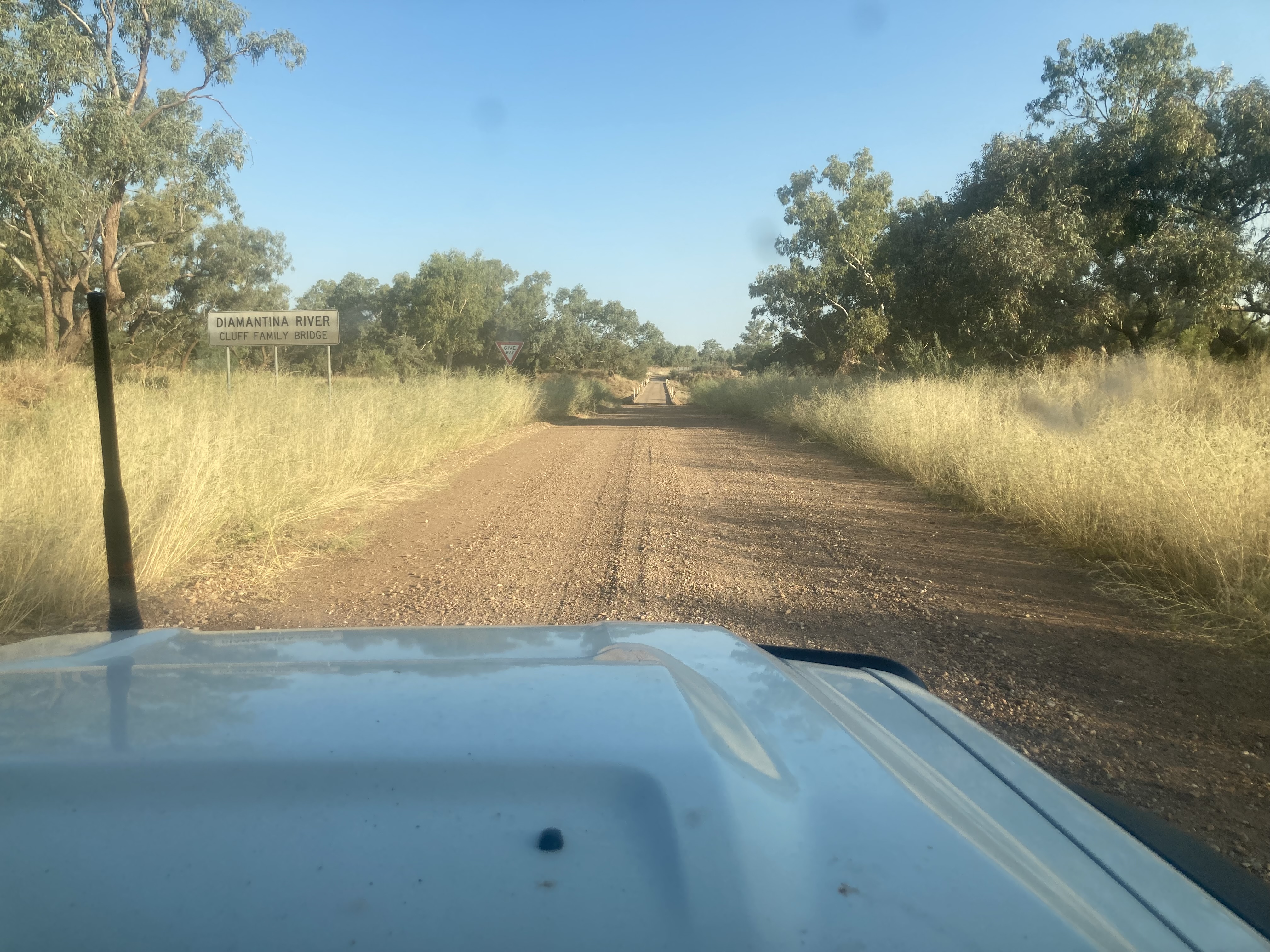
3rd. Fantastic birding for about an hour from sunrise. Hundreds of White Plumed Honeyeaters mobbing everything else that went past, but everything switched off at 6:45, really marked cutoff point.
Packed to head for Boulia. Making it with 22 litres to spare, so not as close as I thought. I set up camp on the banks of the Burke River just out of town. Birdwatched for the afternoon until a car playing loud music sent all the birds up river. I moved on to the Old Cork Station and a waterhole there.
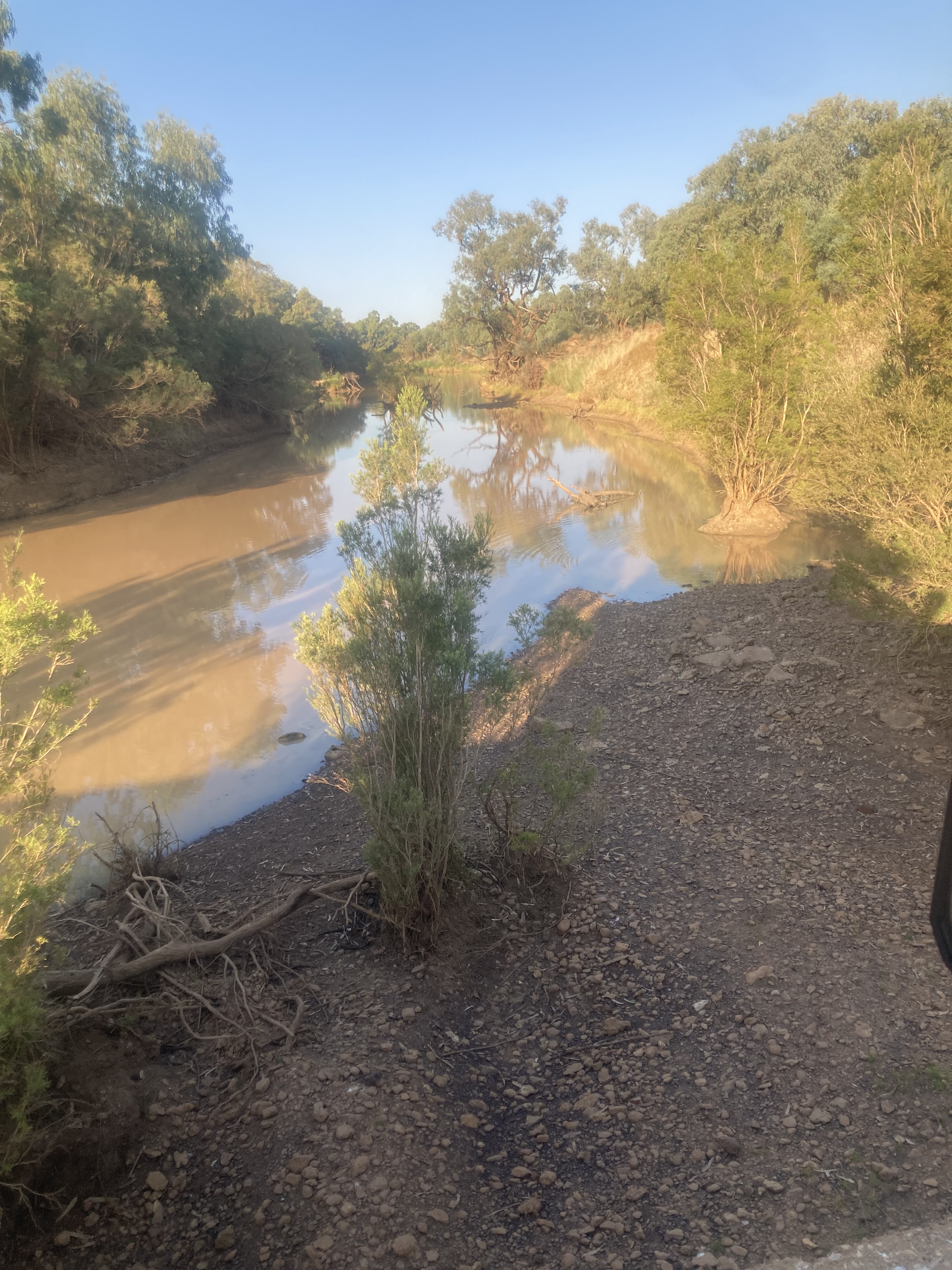
It was a lovely treed spot with few flies, so I settled in and went for a swim. Nearly lost my crocs to the mud, fishing for them to my elbow in thick black ooze. Waded out in mud up to my knees, reaching neck deep before I was out of the mud. The water was so black, I couldn’t see my hand at all under water. I think I came out cleaner, at least not sweaty, but I still had to use fresh water to wash the mud off my legs and feet. A jetty is essential here.
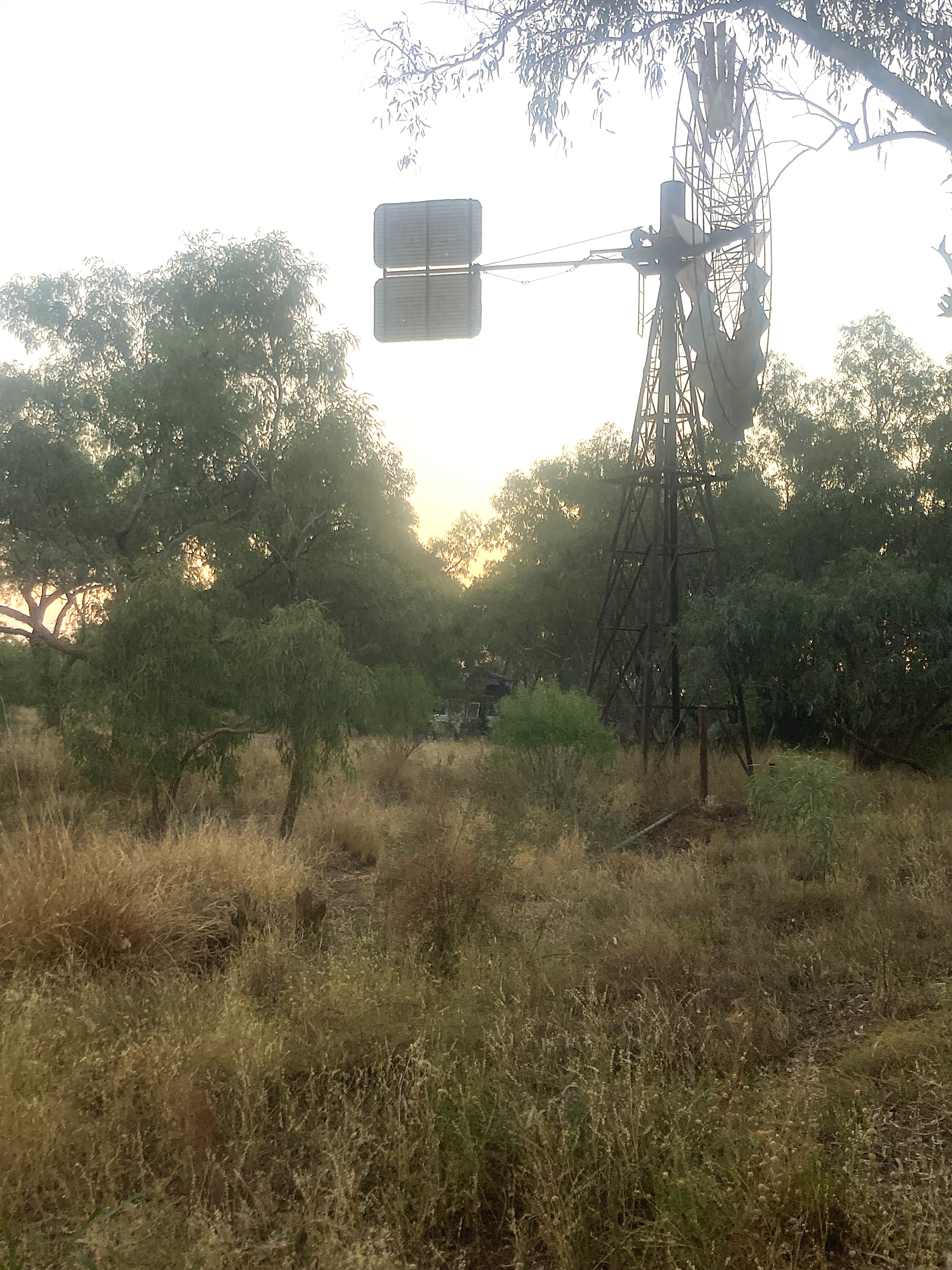
No other people staying here, although many have camped and left their shit behind. There were lots of square holes where toilets had once been. I felt very virtuous with my chemical loo in the car.
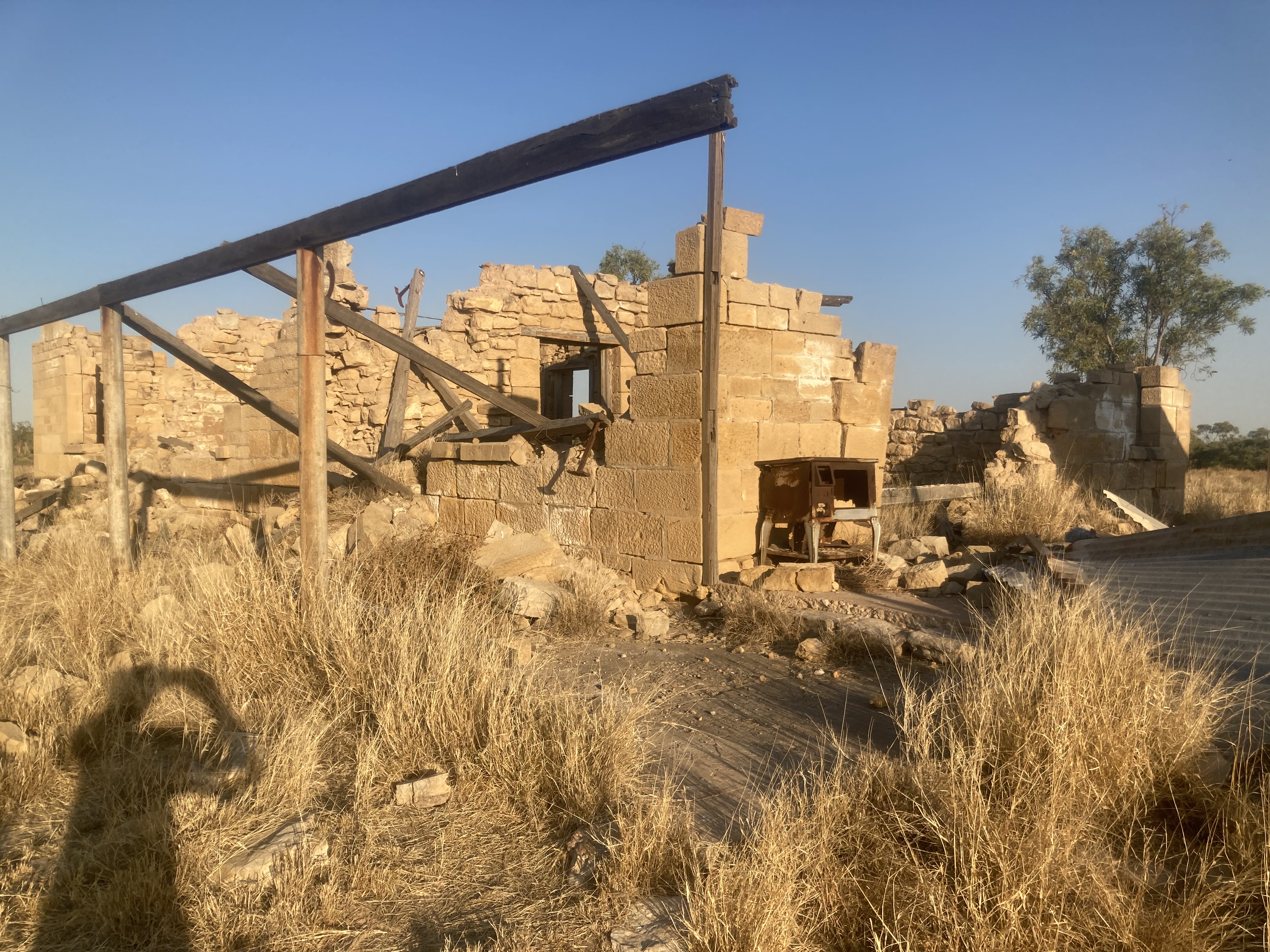
The ruins of Old Cork Station made me reflect that we are often sad to see the ruins, as we know what they may have looked like, and acknowledge the destruction that has occurred over time. What we don’t recognise is the ruined landscape as we don’t have the knowledge of what was here before the cattle. Owners on other similar properties have told me that their land was always like that, and only looks bad now because of an ongoing drought. It will come back, they say! Sad to say that it’s not a drought, it’s the climate and it is very variable. A few good years are not the norm. The first bad time for the cattlemen was back in 1860. A Royal Commission even then found that cattlemen were to blame for overstocking, ruining the soil, and losing the fertility and vegetation cover to the winds. See those sand dunes?
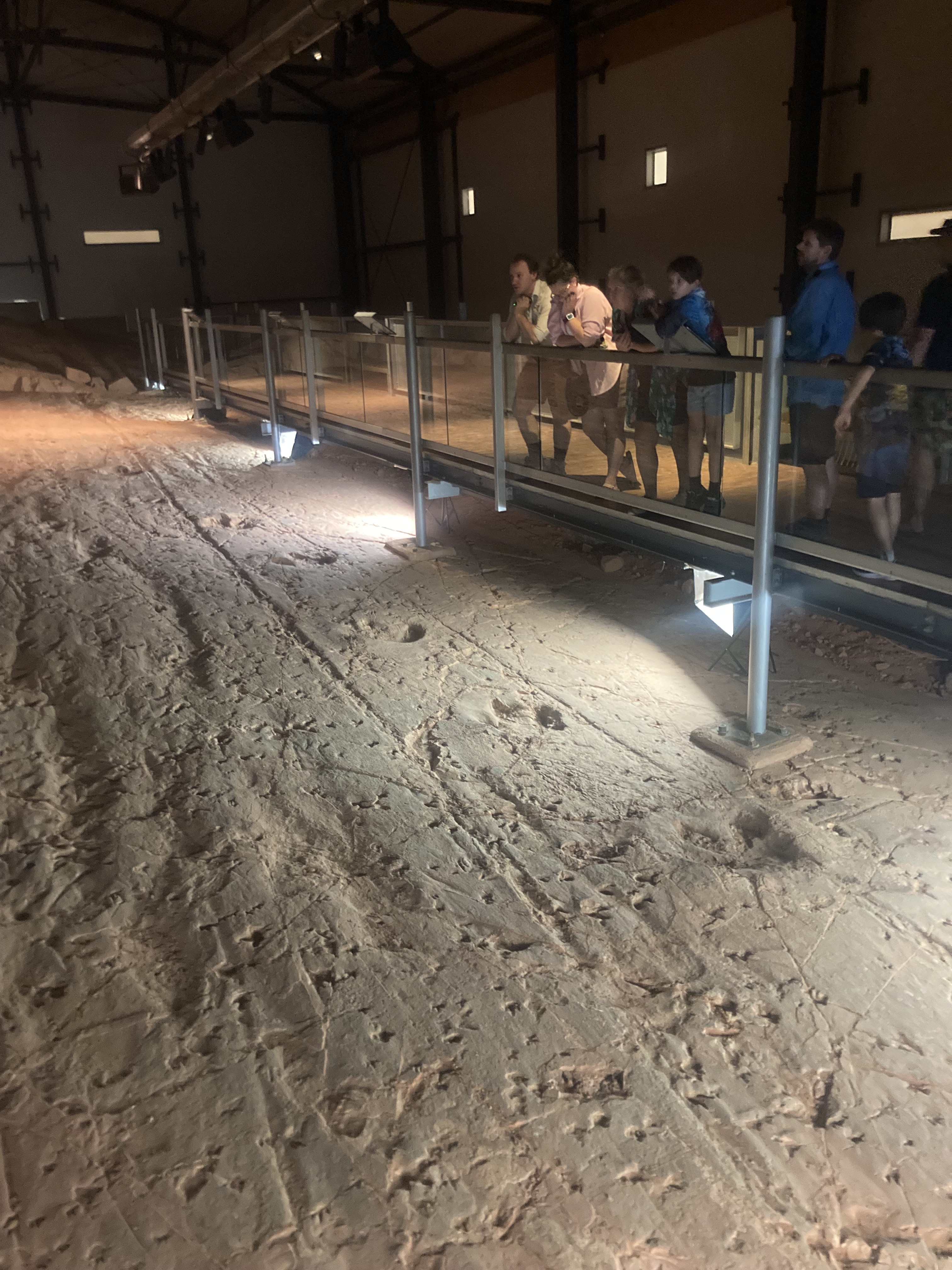
Wednesday 4th. Into Lark Quarry and a tour of the dinosaur stampede. An incredible discovery and nothing like it anywhere else in the world. Deservedly a National Monument. On to Bladenberg National Park, which turned out to be another dust bowl sold to Parks after destruction by cattle. The waterhole was totally black, and not inviting at all, so I moved on into Richmond to meet up with the Flannacinos.
Kerry’s car was still overheating despite having the radiator replaced. I crawled underneath to look up at the new radiator and discovered that it was completely shrouded by a plastic bag. Once removed, there were no further problems. Her mechanic was quite relieved that he hadn’t stuffed up.
Grace and Robbie headed off up to Porcupine Gorge and north, while Kerry and I set off south through Winton, Barcaldine and Condamine before we split up for her to visit her sister in Mullumbimby while I continued south to the Barrington Tops and some walking. I enjoyed several days up in the mountains before dropping down to visit family for a few days near Newcastle, then south on freeways to Corryong in time for trivia in the Bottom Pub.
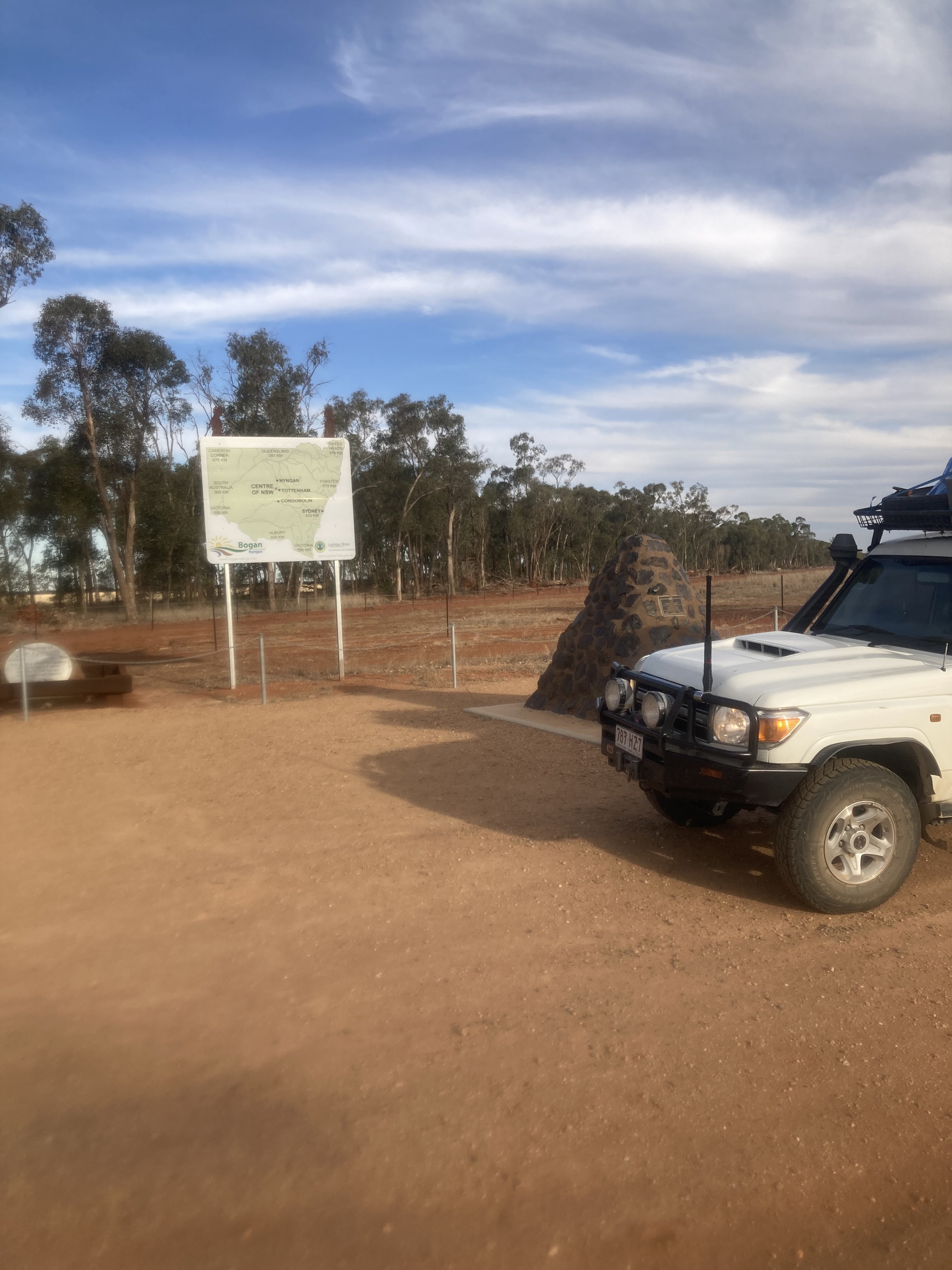
During the trip I had been chatting by text with a Townsville based online contact, and found that she was visiting family near Bacchus Marsh. We agreed to meet up for a pub lunch in Bacchus Marsh on Sunday 22nd after I had been to a Monash Bushwalkers reunion on the Saturday. That lunch with Sharon lasted 3 hours and was the start of a new life for us both.
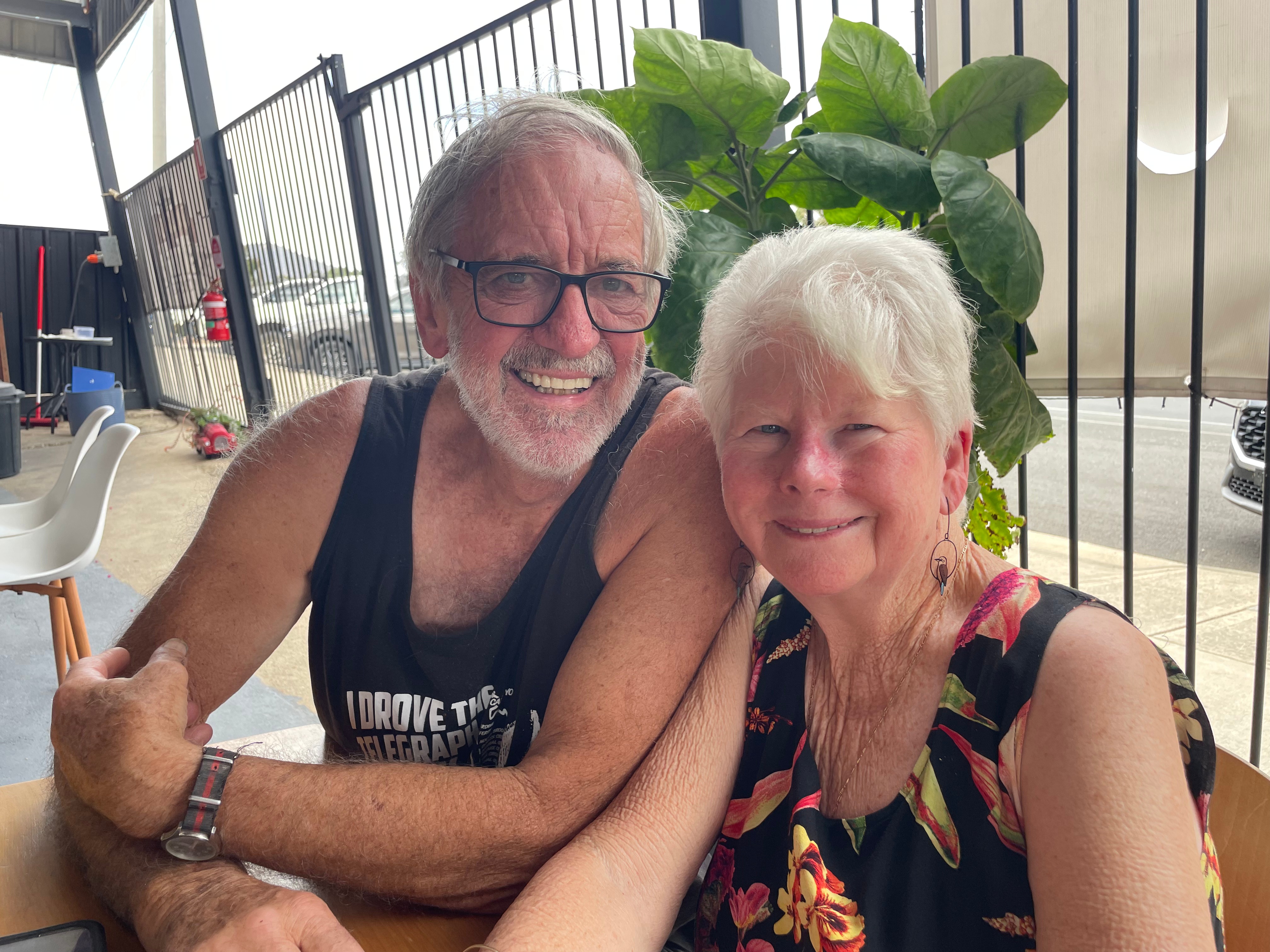
 I am Footloose and Free